Mastodon Climate Citizen --> Mastodon
Showing posts with label pollution. Show all posts

Monday, December 2, 2024

INC5: Negotiations for Global Plastics Treaty 5th meeting in Busan, South Korea

Plastic bottles and Styrofoam in Merri Creek
Outcome summary: Negotiations fail to conclude, but some progress made. Still wide divergencies in some areas. A resumed session in 2025 agreed to.

The United Nations Intergovernmental Negotiating Committee for a Global Plastics Treaty is holding its fifth meeting in Busan, South Korea from 25 November to 1 December 2024 to prepare a treaty by the end of 2024. This meeting is it. 

Global Plastics pollution is an escalating Crisis that interlinks with the Biodiversity Crisis and Climate Crisis. The Health and environmental impacts of plastics, microplastics and nanoplastics are of increasing concern as more research is done.

The process for a Global Plastics Treaty was started in March 2022 at the resumed fifth session of the UN Environment Assembly (UNEA-5.2). See my reports of INC1INC2INC3, INC4.

A Zero Draft of the treaty was prepared at INC4 with elements of both common rules for all parties, and a nationally driven policy framework, and many procedural issues still to sort out. As this zero draft contained some 1500 brackets, in the interim the Secretariat has prepared a non-paper  to try to streamline negotiations start.

Australia is a member of the High Ambition Coalition to End Plastics Pollution, which put out this joint Ministerial statement before INC5.

UNEP INC5 website | CIEL INC5 preparatory work | IPEN at INC5
Break Free From Plastic News | Break Free from Plastics POPlite daily summaries
 | Minderoo Foundation | GAIA news updates

December 1 - Day 7

IISD/ENB have a highlights report available with a summary of Final Plenary discussions.

  • They agreed to adjourn INC-5 in Busan, Republic of Korea, and convene a resumed meeting at a later date. Some countries wanted it early in 2025 not to lose momentum, while others like Saudi Arabia called for later - July or August.
  • delegates agreed to use the Chair’s revised Text as a basis for negotiations at the resumed fifth session of the INC (INC-5.2), and also other texts.
  •  INC Chair Vayas resassured delegates that “nothing is agreed until everything is agreed.” 
  • While supporting it as the basis for negotiations at the next meeting, several delegations underlined that the Chair’s Text should remain open to additions and deletions. They noted that the text did not always reflect the discussions held during the week and excluded some countries’ “red lines.”
  • The Arab Group and the Russian Federation noted that the Non-Paper containing the draft text of the Chair of the Committee, circulated on Friday, 29 November 2024, better reflected discussions, but were willing to engage on the basis of the Chair’s Text
  • “We are not leaving Busan discouraged,” shared the EU, encapsulating the mood during the closing plenary. 
  • Several delegations spoke, with Mexico and Rwanda speaking on behalf of 95 and 85 countries, respectively, to call for a strong treaty, which would include articles on production, hazardous plastics, and chemicals of concern.
  • Kuwait, who spoke for the Like-Minded Countries, expressed concern that “at this session, expedient progress was undermining trust and inclusivity,” and noted “attempts to stretch” the UN Environment Assembly (UNEA) resolution mandate beyond its limits.

Watch the final Plenary on UN WebTV here: http://webtv.un.org/en/asset/k1n/k1ngcaixml

After report backs from the 4 contact group co-chairs,  Chair has proposed the latest non-paper as a starting point for further negotiations at a resumed session 5.2 at some time in the future. Various Parties spoke in plenary, including Saudi Arabia, Iran, Kuwait, India, Ghana, Rwanda, Mexico, Uruguay, European Union, Finland. Panama, Russian Federation, Iraq, Canada, Cuba, Grenada, Samoa, Japan, Vanuatu, Jamaica, Armenia, Tonga, UK. Powerful statements by Rwanda on behalf of 85 countries and Mexico for 95 countries for an ambitious legally binding full-life-cycle treaty that addresses chemicals of concern.

2 December - International talks on curbing plastic pollution fail to reach agreement (Guardian)

Chair releases latest text. Some Delegates and Policy Experts  have responded with this press release (GAIA):

Plastics Treaty INC-5: Global South Delegates and Civil Society Speak Out 
Delegates and Policy Experts React to the Chair’s Proposed Treaty Text

Busan, South Korea – Global South delegates and civil society leaders spoke at a press conference at BEXCO Convention Center this afternoon, to share their outlook on the negotiations thus far and what it means for the Global South. In the hour before the press conference, the Chair released his latest paper, which proposes text for the treaty to serve as a basis for the final bout of negotiations. 

Arpita Bhagat, Plastics Lead at GAIA Asia Pacific states: “The Chair’s latest text is unacceptable to the majority of Global South countries and the billions of people they represent: people who are fighting for their lives for a strong treaty. Nor is it acceptable to people harmed by plastics in the Global North, including environmental justice, front and fenceline communities, and Indigenous Peoples who have long been sidelined in the process. It is not a reflection of the will of the vast majority of Member States, who support ambitious measures in a legally-binding, global instrument. Once again, as throughout this process, the Chair has bent to the will of the petrochemical states while dismissing the demands of the majority, in a completely non-transparent, exclusionary process. This is a matter of life and death, especially for Global South communities. Member States will not roll over and play dead. As long as ambitious countries hold on to their principles, civil society will have their backs.” 

Cheikh Ndiaye Sylla, National Focal Point for Senegal, states, “This version of the text is…not acceptable…For life cycle, we have to negotiate this from the polymer, meaning the production. It is legally binding as per the title…No text is better than bad text.”  

Dr Sam Adu-Kumi, Negotiator for Ghana, states, “The whole world is looking up to us…they are expecting something better that will protect the environment, human health, our brothers and sisters, and our young populations….So we are not here to accept anything short of an ambitious treaty.” 

These elements in the new text are particularly problematic:

On core obligations:

  • Plastic production (“Supply”): the Chair’s text does not represent the strong language Panama and more than 100 other countries proposed, including a global target on production reduction; it is full of weak text options, such as referring to a reduction target as  “aspirational.” This critical article must be strengthened with national targets. 
  • Chemicals of concern: The Chair has stripped away systematic controls on toxic chemicals from this article, where we need the strongest measures to address the fundamental threat posed by chemicals of concern. 
  • Waste management: the waste hierarchy has been removed; and “energy recovery” – code for waste-burning technologies– remains.

On means of implementation:

  • Financial mechanism: At least 126 countries support an independent, dedicated fund– the most widely supported provision in the instrument– yet the Chair’s text undermines it with weak, optional language that fails to provide adequate funds, such as through a polymer production fee.

The treaty infrastructure is weak:

  • No right to vote: The Chair’s text fails to give countries the right to vote, ensuring further paralysis of the process. This is not the “start and strengthen” treaty that we were promised. 

The week in Busan started with petrochemical states threatening to derail the process if Member States exercised their right to call for a vote, which brought us to this point. Continuing the work in an INC 5.2  will only be worthwhile with a transparent process where states put an end to the tyranny of the minority.  

As we confront the potential failure of the negotiations, we remind Member States that, as they themselves have stated, no deal is better than a bad deal.

Panama makes an  Impassioned plea  alongside all high ambition countries at the global plastic treaty negotiations in Busan. We can’t be dragged down by those with low ambition. Treaty must reduce plastic production & address chemicals of concern. Its not a waste a management treaty

30 November 2024 - Saudi Arabia Leads Pushback Against Global Plastic Treaty (New York Times) "Saudi Arabia, Russia and other producers of petroleum, which is used to make most of the world’s plastic, have pushed back against measures that would address plastic pollution by placing curbs on excessive plastic production. The Saudis and their allies have also said they oppose any treaty that would start to list and phase out chemicals present in plastic that are thought to be harmful to health."

November 30 - Day 6

According to Break Free from Plastic: "The sixth day of #INC5 negotiations for a  #PlasticsTreaty have been spent in informal closed door meetings that are extending to the late evening." 

Marine Biology Professor Rebecca R Helm reports: "Citizens at the UN plastics negotiation are no longer allowed in rooms. This is, in some ways, abnormal.  But it’s also not unexpected. Rumor has it a key sticking point is on capping plastic production. Now we wait."

IISD/ENB 30 November summary and In the Corridors section.

Will INC-5 deliver a treaty? With only a day left for delegates to negotiate, the answer to this question generated mixed responses. Amidst the “aura of confusion” at the venue, some country delegates felt that the light at the end of the tunnel was “getting brighter.” “There are some articles that we can already agree on,” referring to issues such as information exchange; public information, awareness, education and research; final provisions; and the establishment of the conference of the parties (COP), subsidiary bodies, and the secretariat. Others, however, were more cautious, sharing that the clean articles need to be attached to strong language on production, design, waste management, and finance. “We are not there yet.”

For some “stakeholders,” though, being excluded from the talks at this crucial stage sent a “dark signal.” At a press conference of the International Indigenous Peoples’ Forum on Plastics on Saturday, Indigenous representatives stressed, “We have been silenced and strategically undervalued” in these negotiations. “How can you talk about a just transition, when we are not given a space at the table?”  Another delegate shared, “we are rights holders in this process,” and “this treaty must guarantee not only our participation in the negotiations, but also in the implementation of measures to tackle the onslaught of plastic pollution, which disproportionately affects our communities, relatives, and Mother Earth.”

Will it be a plastics treaty, or a plastic waste treaty? “It is worrying that at this stage in negotiations, we are still unsure,” opined one participant. The text circulated on Friday has elements that, if agreed, “could give us a plastics treaty, with upstream measures related to production and design.” On the other hand, “if we cannot agree on these, we will go home with a plastic waste treaty,” she said, noting that this would be “a real waste.” Another delegate was overheard lamenting, “If after all this, we end up with a plastic waste treaty, which countries can implement domestically if they want, does it even make sense to call this an international treaty? Will it have been worth our efforts?”

One seasoned delegate wondered out loud whether there was still time to change the working modalities of the negotiations. “By now, we have come to the end of the line on contact-group-like negotiations, with every state commenting on every line,” drawing attention to the fact that the informal closed-door negotiations seem like “contact groups, just without the transparency.” He described several formats that could “push negotiations over the finish line,” including the round-table Vienna setting, which would bring the Chair and key coalitions together in face-to-face discussions. He wondered whether, “we may have run out of time” to switch gears in this way.

With the informals going on upstairs, delegation after delegation held bilaterals with the INC Chair downstairs, perhaps in a bid to break the deadlocks on core issues. However, at the end of the evening, it was still unclear whether “we’ll be shedding happy tears on Sunday, or weeping.” In hushed conversations throughout the day, some were heard discussing “plan B options,” in the event that INC-5 does not deliver a treaty. “Who will fund a resumed meeting of the INC, if it comes to that?” queried one delegate. “Should we keep hope alive?” asked one delegate. The jury is still out.

Break Free from Plastics POPlite daily summaries and awards for Day 6:  


CIEL Update on negotiations:

30 November 2024 - Greenpeace challenges petrochemical tanker as Busan plastics treaty talks enter final stage (Greenpeace)

Greenpeace International activists have boarded a tanker that is set to load toxic plastic chemicals from South Korea’s Hanwha TotalEnergies complex. They are urging governments to resist fossil fuel and petrochemical industry interference in the talks and to deliver a treaty that firmly cuts plastic production, which on current trends is set to triple by 2050.

“We are taking direct action here today – stopping this plastic shipment – to urge world leaders to listen to the voices of the millions of people around the world, along with scientists and businesses – who are demanding they cut plastic production to stop plastic pollution,” said Alex Wilson, Greenpeace UK climb team volunteer.

They continued, “As we protest here, petrochemical industry lobbyists are out in force in Busan. They are using their power, money and access to try to ensure that the treaty fails to do what it must – turn off the tap of plastic production.

Tuesday, May 30, 2023

Australia at Global Plastics Treaty negotiations in Paris #INC2

The second meeting of the Intergovernmental Negotiating Committee (INC) of the Plastics Treaty ocurred from 29 May – 2 June 2023 in Paris, France. Referred to with the hashtag #INC2. The first meeting convened 28 November - 2 December 2022 at Punta del Este, Uruguay, which I reported on. The aim is to complete negotiations by the end of 2024 and create a global, legally binding plastics treaty. 

Katherine Lynch (Australia) at the final Plenary

Australia's Environment Minister Tanya Plibersek attended the first day of the conference, then returned to Australia. Australian official Katherine Lynch played a key role in co-facilitating Contact Group 2.

In 2022 Australia joined the High Ambition Coalition of 20 nations including the UK, Canada, France, and Germany that aims to end plastic pollution by 2040, including a legally binding target to phase out plastic waste products by 2025. But some countries, including the United States, Saudi Arabia and China, want to make targets voluntary. Read more at Sydney Morning Herald (28 May): Australia steps in to stop countries watering down plastics pact.

Outcomes:  

  • Delegates mandated the INC Secretariat to prepare a zero-draft of the treaty in advance of INC-3.
  • INC3 scheduled for Nairobi, Kenya in November 2023, to work on a Zero draft. 
  • Committee welcomed offers to host INC-4 by Canada (Ottawa April 2024) and INC-5 by the Republic of Korea towards the end of 2024.
The options paper from INC2 will inform the ‘zero draft’, the text with legal language that will form the blueprint of the final treaty. 

An important decision will be what kind of treaty: a treaty focused on global obligations, where every country needs to comply with an international set of standards (like the Montreal Protocol or Minamata Convention)? Or should it be a treaty that relies on nationally determined measures, where countries set their own goals and targets (like the Paris Agreement)?

This blogpost was updated frequently over the week.

Wednesday, September 7, 2022

PFAS, synthetic turf and a new planetary boundary proposed and being exceeded


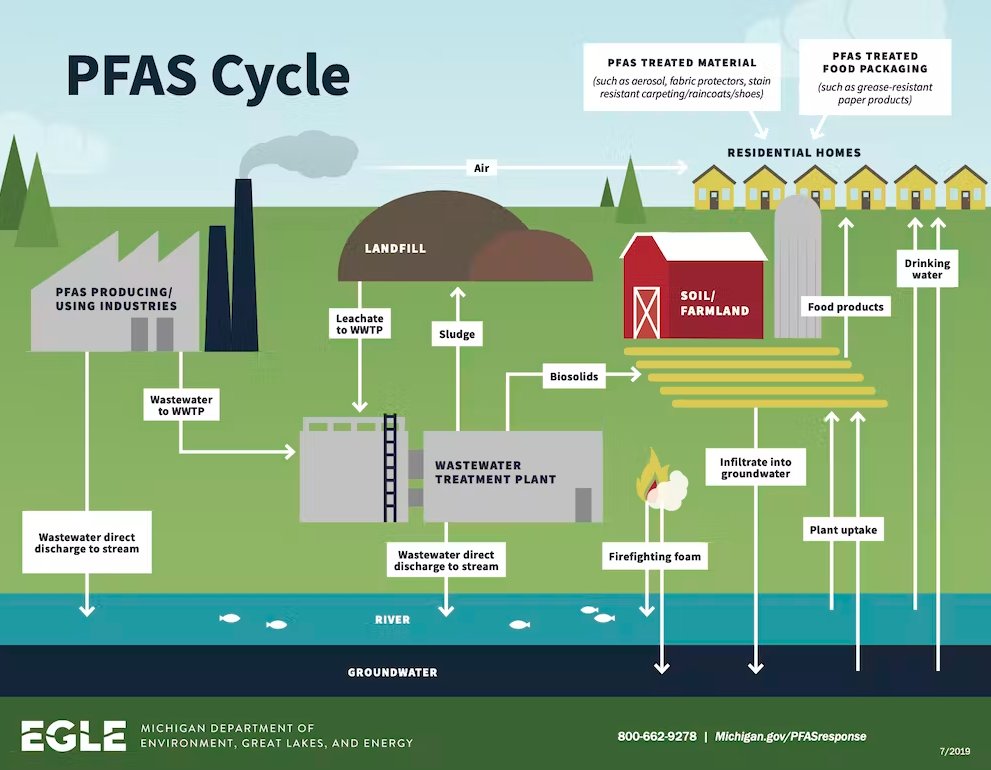
Very concerning. Increasing production and use of Forever chemicals, that is, the thousands of chemicals in the PFAS class: Per- and Polyfluoroalkyl Substances. These are not natural chemicals, and they do not break down in the environment. The chemicals are widely used. According to the Department of Health they are not manufactured in Australia, although plenty of products that use PFAS are imported.

PFAS is spread widely through water pollution and oceans and as aerosols in the atmosphere contaminating soils. PFAS chemicals are found very widely across the earth in rainfall. So, our water resources  are now contaminated.

My attention was drawn to this Euronews article. It sums up the recent scientific findings and outlines the issues: Rainwater everywhere on Earth unsafe to drink due to ‘forever chemicals’, study finds

Fluorine signatures and PFAS chemicals have been found in synthetic turf matting and fibers in the USA and in Sweden. With the study in Sweden the researchers say the presence of PFAS chemicals "we believe these results to be broadly translatable to Artificial turfs globally".

Friday, April 17, 2020

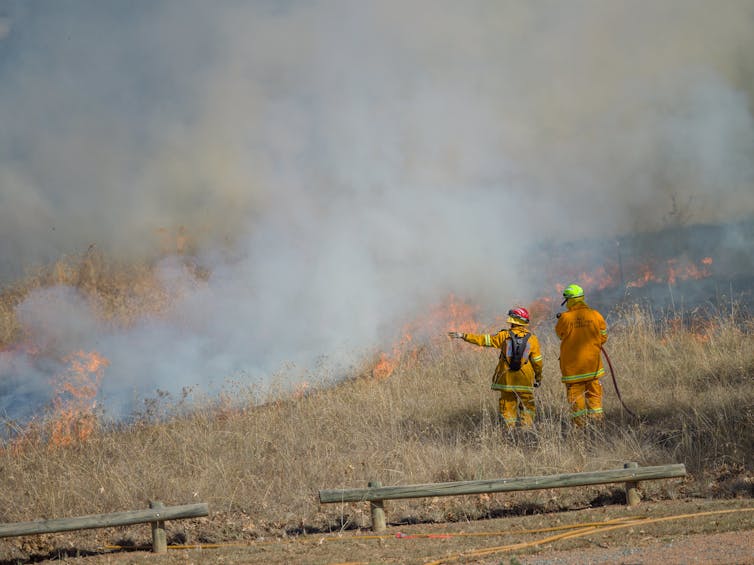
Guest Post: The smoke from autumn burn-offs could make coronavirus symptoms worse.

I felt somewhat vindicated when this post appeared at The Conversation warning of hazard reduction burns smoke during the early pandemic. Correlation links had already been found between covid19 severity, increased mortality and higher levels of pollution.

See: Pandemic ponderings: Indications that High levels of Air Pollution exacerbate Covid19 spread (virus may be airborne) (March 26, 2020) and Pandemic Ponderings: US study finds Air pollution link to Covid19 deaths (April 8, 2020)

The smoke from autumn burn-offs could make coronavirus symptoms worse. It’s not worth the risk

MomentsForZen/Flickr, CC BY-NC-ND
Don Driscoll, Deakin University; Brian Oliver, University of Technology Sydney; Courtney Alice Waugh, Nord University; Marcel Klaassen, Deakin University, and Veerle L. B. Jaspers, Norwegian University of Science and Technology

Friday, November 18, 2016

Kick Polluters out of COP22: Climate Justice activists stand with Moroccan communities


Article first published at San Fransisco Bay Area Indymedia

Morocco has painted itself as a green leader at this UN climate conference, and in many ways it is, but beneath the surface there are also the stories of pollution, greenwashing and hypocrisy which activists have brought to light.

Activists on Thursday highlighted two of these stories, of heavy pollution caused by phosphate mining of the water at Safi, a town on the Moroccan coast, and at Managem's silver mine at Imider. Water is Life. The phosphate company and the silver mining Company are both sponsors of COP22 that are destroying the water quality, health and life of local communities.

Friday, August 29, 2014

Anglesea community want Alcoa coal mine shut down


Originally posted to Nofibs.com.au on August 23, 2014.

Anglesea residents want to see the Alcoa owned power station and coal mine they have suffered with for the last 50 years closed down. Since Alcoa has closed the Port Henry Aluminium Smelter the last justification for the mine and power station has ended. The coal mine and power station no longer has a social licence to operate according to the Surf Coast Air Action community group. Victoria currently has a surplus of generating capacity and we don't need the power from the highly polluting Anglesea power station.

I joined several hundred people in a protest at Anglesea on Sunday 10 August, located at the skatepark. It was a big turn up to the rally organised by Anglesea based community group Surf Coast Air Action (SCAA). There were a tonne of speeches - perhaps too many for a rally. But each speech brought a different dimension. See my photos from the event.

A highlights video of the event includes excerpts of a few speakers, associated events, and visiting the coal mine.

Monday, March 18, 2013

Oregon residents Sound the Alarm on coal dust, coal export and climate change

Oregonians rallied on the steps of the State Capital in Salem on Wednesday 13 March to protest Australian company Ambre Energy's Morrow Pacific coal export project which would transport 8 million metric tonnes of coal annually by rail and barge down the Columbia river destined to be burnt in China, with the pollution returning by prevailing winds to the US and Canada.

Columbia Riverkeeper reported on their facebook page that 425 people attended the midweek rally in Salem to stop coal export. See pictures of the rally on Demotix. You can read more about the fight to stop coal export from the Pacific Northwest at Power Past Coal.

The fight against coal export is an international one. Newcastle residents in New South Wales, Australia are fighting against the T4 coal loader being built to expand coal export from the world's biggest coal port. It is the same fight to stop King Coal in Australia and in the United States. One of the three companies keen to export coal from the Powder River basin is Ambre Energy, a Queensland based company.

Saturday, March 16, 2013

Coal dust and climate change: Newcastle residents march against proposed T4 coal loader

Up to 1500 people attended a rally in Newcastle today in opposition to a fourth coal loading terminal being built. Gathering at Customs house at 10am, people marched to Civic Park, chanting 'our water, our health, more precious than your wealth' and 'one two three four, no to T4'. Protestors are concerned with the impact of coal mining on agriculture and water resources, coal dust pollution risks to public health, environmental concerns, and contribution to global climate change.

Related: Photos on Flickr

My favourite photo from the protest is a placard saying "The reason you want another coal terminal is that you are fucking Greedy" which perhaps states the obvious...but sometimes the obvious needs to be put in such blunt terms. Already China is indicating it wants to cap it's coal consumption to 4 billion tonnes per year, not much higher than it's current consumption. Much of the recent coal expansion in NSW and Queensland, and the development of other unconventional fossil fuels like CSG, has been driven by the increasing prospect of restrictions placed on fossil fuel extraction due to carbon emissions and the threat of global warming. These companies want to rip as much as they can out to make their profits before community outrage forces them to stop.

The decision by Metgasco to stop exploratory drilling in the Northern Rivers region last week was a massive victory and came after strong community outrage with protests, blockading and numerous arrests during civil disobedience by community members. Much of the community resistance has been co-ordinated by the Lock the Gate Alliance. Another victory was had when the Federal Government announced a water trigger to the EPBC Act as a reform to coal and gas mining and development

And so this Newcastle rally was organised by the Coal Terminal Action Group, an alliance of 17 community groups in Newcastle and the Hunter Valley.

Speakers at the rally at the end of the march included former farmer John Kaye, Brett Holmes from the NSW Nurses and Midwives Association, Associate Professor Nick Higginbotham, Bev Smiles from the Upper Hunter community,

John Kaye said that communities must come before coal and that sustainable planning should look to the long term, not the short term, to preserve arable land and water resources in the Hunter Valley for agriculture rather than allowing massive coal mining development.

Monday, March 4, 2013

Moderate Volcanic activity slowing global warming by 25% suggests study

Atmospheric warming has slowed over the last decade, and scientists from the University of Colorado at Boulder believe the cause of this may be all the small to medium volcanic eruptions spewing sulphur dioxide high into the atmosphere where it changes the reflectivity of the top of the atmosphere.

It is well established that major volcanic eruptions like Mount Pinatubo in the Philippines in 1991 emit millions of tons of sulphur dioxide that effectively cool the earth slightly for several years. It has also been theorised that the stagnation in global warming in the mid twentieth century was caused by the atmospheric nuclear testing carried out between 1945 and 1980. It seems that nuclear winter actually occurred, although on just a small scale. A small nuclear war would also likely cause global cooling through the amount of particulate matter thrown up into the stratosphere. But really this is not something to even contemplate happening due to the amount of death and devastation involved.

Scientists have theorised that other reasons for the slowing in the rate of atmospheric global warming over the last decade is that a greater proportion of heat is being taken up by the world's oceans; and secondly that Asia, particularly India and China, have increased their sulphur dioxide emissions from coal fired power by 60% between 2000 and 2010 which has increased the stratospheric aerosol layer of the atmosphere changing the reflectivity.

Friday, December 28, 2012

China's coral reef ecosystems suffer devastating 80 per cent decline

In the last 30 years the coral reef ecosystems off the coast of mainland China and Hainan Island have suffered an 80 per cent decline largely due to unrestrained economic development driving coastal development, pollution and overfishing.

The study, published in the journal Conservation Biology - The Wicked Problem of China's Disappearing Coral Reefs - was conducted jointly by scientists from the Australian Research Council Centre of Excellence for Coral Reef Studies and James Cook University, and from the South China Sea Institute of Oceanology, Chinese Academy of Sciences.

"A wicked problem is one that is very hard to solve without having a whole lot of other foreseen and unforeseen consequences to people, industries and to the environment itself," said lead author Professor Terry Hughes.

Saturday, April 28, 2012

Pollution caused global warming hole delayed climate change over eastern United States


Reduction in air pollution from coal fired power stations due to environmental regulations since the 1980s has increased regional global warming in the Central and Eastern United States. Climate scientists from the Harvard School of Engineering and Applied Sciences (SEAS) found that particulate pollution, particularly from coal fired power stations, caused a global warming hole, or a large cold patch reducing temperatures by up to 1 degree C in the region, particularly lowering maximum temperatures in Summer and Autumn.

Monday, June 27, 2011

Oceans at high risk of unprecedented Marine extinction scientists warn

A report issued last week from the International Programme on the State of the Ocean (IPSO) has strongly warned of the damage to the health of the world's oceans and marine life and that if the current business as usual trajectory of damage continues "that the world's ocean is at high risk of entering a phase of extinction of marine species unprecedented in human history."


Dr. Alex Rogers, Scientific Director of IPSO and Professor of Conservation Biology at the Department of Zoology, University of Oxford, gives the overview of the main problems affecting the ocean — and some suggested solutions.

Related: International Programme on the State of the Ocean (IPSO) | The Ocean in a high CO2 world | Frontline - World's oceans in crisis: What can be done?

Saturday, June 11, 2011

Greenpeace targets BHP Billiton over Carbon Pollution


A Busy week for the activists of Greenpeace Australia who did a banner drop outside BHP Billiton headquarters in Melbourne on Monday and followed it up midweek with erecting a Pollution Tax Collection Point at BHP’s Mount Arthur Mine in the Hunter Valley holding up a BHP coal train temporarily.

According to Greenpeace BHP Billiton is one of the top ten polluters in Australia. In 2009 BHP produced nearly 13 million tonnes of carbon pollution. The company operates some of the most polluting coalmines in Australia. The pollution from its coal mining is set to increase by 100% by 2020 - wiping out any carbon cuts Australia makes with the introduction of a carbon tax from July 1st 2012.

Read more from Greenpeace Australia on these actions:

* BHP Billiton – time to pay up

* Coal Train stopped in tracks

Wednesday, March 2, 2011

Carbon pollution subsidies outstrip climate change funding

New analysis done by the Australian Conservation Foundation shows that while funding and subsidies for solar power and climate change related programs has increased by $500 million per year, subsidies and concessions for fossil fuel carbon pollution related activies soared by $1.5 billion per year, 3 times as much.

Wednesday, March 31, 2010

Brian Walters on Emission permit property rights and the CPRS

The carbon emission targets and the compromises to the fossil fuel industry have been well criticised in the Rudd Government's Carbon Pollution Reduction Scheme. But what hasn't been made clear is that the emissions permits granted under the scheme become effective property rights that will make it much more difficult for future Governments to ratchett up the targets or change the scheme when more effective action is required. Brian Walters, a prominent senior legal counsel in Melbourne and past President of Liberty Victoria, outlines the problems in the CPRS, particularly on emission permits as property rights.

Brian is standing as a candidate for the Greens for the seat of Melbourne in the upcoming 2010 state election.

I videoed his speech at a picket of Peter Batchelor, Victorian Minister for Energy and Resources, who was about to attend a $3000 a head Victorian Coal Industry conference. I took the time to transcribe the speech, so you can Read or watch:


Brian Walters on the Carbon Pollution Reduction Scheme (CPRS)


It's great to have you all here, and I say all because it is great to have our numbers augmented with the Victoria police who brought along the equine support - thanks for coming - it's great to have you here and no doubt supporting our cause.

The CPRS. Some people say that the Greens are hypocritical for not supporting the CPRS. They say, "well look, this scheme is a step in the right direction, it's better than nothing! We ought to at least support that!"

The Carbon Pollution Reduction Scheme, or the Continued Polluting Regardless Scheme, is worse than nothing at all and it will not be supported by the Greens at any time. Not in this form.

First thing we have to say about the scheme is, and we all know, the targets. They are scandalous! And that is because they have been set by polluters, not by scientists. We are going to pay out as Jesmine said about $24billion at least to big carbon as part of this scheme. $24billion. That means its the first source of revenue in history in Australia which will run at a loss.

And what are we getting from all this money we are paying out to big carbon? Well, according to Treasury modelling, nothing! There won't be any reducton in carbon pollution in Australia. What we will get will be brought in and imported from overseas, and that won't be much anyway.

We are giving major concessions to coal. For the first five years they will be given concessions of course which will give them a windfall in profits and encourages the use of coal. The energy intensive trade exposed industries will get far more: they get 25% free permits - this is industries like aluminium smelting - 25% free permits going up to 45% in 2020. In other words, we are actually encouraging the expansion of major carbon pollution by this scheme.

[Crowd interjection: Corporate Welfare!]

The exact opposite of what we want to achieve.

One of the things about this scheme which I'm not sure has had much coverage, but in my view is the worst part of the scheme, is that it makes it impossible for future Governments to ratchett up the targets. That's because under a section of the legislation the carbon pollution permits, won't just be permits, they will be property rights.

You've all seen 'The Castle' and you know the Government of Australia under the constitution can't acquire property except on just terms. So you give this property right to carbon polluters - it's a social evil - give them the right to do this evil thing and make it a property right and it means that future governments down the track can't acquire those property rights or diminish those property rights except on just terms.

Now that is scandalous. And it is not what was proposed by Garnault or by anybody. We are left with a scheme that will make things worse, and it will not be supported by the Greens.

They are digging a hole, they are digging it deeper, they won't stop digging, and they can't get out of it.

They want to take us down into the graveyard caused by their coal mines, and they are happy about that so long as they can clutch onto their riches on the way down.

The climate crisis is the great moral challenge of our age Kevin Rudd, just up the road today. It is. And we need some leadership to confront it. And leadership is not doing no more and no less than other countries are doing, and in fact we are doing less. The solutions are available and they are inspiring. We owe it to our children and to the planet to adopt those solutions.

Thankyou


Takver is a citizen journalist from Melbourne who has been writing on Climate Change issues and protests including Rising Sea Level, Ocean acidification, Environmental and social Impacts since 2004. I am not a member of the Greens or any political party.