Mastodon Climate Citizen --> Mastodon
Showing posts with label emissions. Show all posts

Thursday, November 28, 2024

Victoria releases latest (2022) Greenhouse gas emissions report showing year on year 4.3 megatonnes increase


The latest Victorian Greenhouse gas emissions report is for 2022 and contains the headline details for Victoria's emissions profile. It was tabled in Parliament by Climate and Energy Minister Lily D'Ambrosio.

The report is 16 pages long, and contains considerably less detail than reports from previous years which broke down data more finely and were often over 6o pages in length. So only headline details are shown, which is very disappointing and may hide particular problems in some sectors.

This is also a Net zero emissions which takes into account Land Use, Land Use Change and Forestry (LULUCF) carbon sequestration. This is notoriously difficult to estimate accurately. 

While the long term trend is decreasing emissions, in 2022 emissions actually increased. This is most likely a rebound effect with regard to recovering from the Pandemic.

Total net emissions in 2019 were  86.8 MT CO2e, in 2020 86.2MT, in 2021 80.4MT,  and in 2022 84.7MT. So between 2021 and 2022 net greenhouse gas emissions (CO2e) increased by 4.3 megatonnes.

Sunday, November 26, 2023

70% chance that global greenhouse gas emissions start falling in 2024 if clean energy and EV trends continue.


Ahead of the UN Climate Conference in Dubai, COP28, Climate Analytics researched when global greenhouse gas emissions may peak. There is a 70% chance global emissions may peak in 2023.  COP28 needs to push strongly for tripling renewables, doubling energy efficiency, cutting methane emissions, and phasing out fossil fuels.

Based on the science, The IPCC says peaking before 2025 is a critical step to keep the 1.5°C limit within reach. 

Emissions are set to rise again in 2023.

The analysis shows there is a 70% chance that emissions start falling in 2024 if current clean technology growth trends continue and some progress is made to cut non-CO2 emissions. 

This would make 2023 the year of peak emissions – meeting the IPCC deadline.

The report says that the "continued explosive growth of wind and solar in particular would push fossil fuels out of the power sector, leading to peak coal in 2023 and peak gas in 2024. Meanwhile, continued growth in electric vehicles could lead to peak oil in 2025.

Thursday, November 23, 2023

Coalition and Greens pushing NSW Labor Government for 70% emissions reduction by 2035 target

It seems the NSW Minns Labor government is under pressure to include a more ambitious 2035 emissions reduction target in its climate legislation about to be debated in the NSW Parliament. The legislation as currently written will entrench targets of 50% by 2030 and net zero by 2050.

But Coalition parties and the Greens want a 2035 target included of cutting emissions by 70% on 2005 levels by 30 June 2035.

NSW Liberal Party opposition environment spokesperson, Kellie Sloane, “The Minns government has introduced a climate change bill with less ambitious targets than the Coalition had, they’ve cut electric vehicle subsidies,” she said.

The NSW 2035 target is still less than Victoria's climate action targets put forward before the election in 2022, and legislated in May 2023 in Victoria. 

Victoria's 2035 emissions reduction target is set at 75-80% reductions on 2005 levels, and net zero by 2045. It places Victoria as globally ambitious in climate targets. Victoria new renewable energy targets are 95% renewables by 2035, 65% by 2030. (Climate Citizen)

Read more at The Guardian

Wednesday, October 25, 2023

Victoria’s renewable energy generation reached 37.8 per cent of Victoria’s electricity generation in 2022/23


A Progress report tabled in the Victorian parliament highlights that Victoria has doubled its renewable electricity generation in the last five years to supply 37.8 percent of the electricity grid. The state is well on target for over-achieving its 2025 target of 40 percent renewables.

But we need to be aware the International Energy Agency (IEA) in its 2023 World Energy Outlook report, has called for a tripling of renewables generation based on 2022 data.

Earlier this year Victoria formerly announced its 2035 climate targets that included a VRET of 95 per cent renewable generation by 2035 (The 2035 targets were an implementation of an election promise announced in October 2022). The legislated VRET 2030 target has also been increased from 50 per cent to 65 per cent. The state also set new Victorian energy storage targets for at least 2.6 gigawatts (GW) of energy storage capacity by 2030 and at least 6.3 GW by 2035 to support an accelerated renewable energy transition in Victoria. 

As at 30 June 2023, there were 17 renewable energy generation projects under construction or undergoing commissioning in Victoria. These projects have a combined capacity of 1,734 MW. There was also one utility-scale storage project – the 150 MW Hazelwood battery – undergoing commissioning. These projects generated around 662 jobs in these renewables projects in 2022/23, many of them in regional areas of the state.

Senate Estimates: As climate change accelerates in 2023, Climate Change Department executive says no change in emission reduction plans


On Monday, 23 October 2023 during Senate estimates for Environment and Communications Legislative Committee, a question was put to the Department of Climate Change Energy, the Environment and Water (DCCEEW) whether plans had changed due to the accelerated global warming seen during 2023. 

The executive replied "It does not change our approach to emissions reduction because, in essence, we are already pushing our emission reductions to go as fast as is possible for Australia."

The evidence is clear: Global temperatures throughout mid-2023 have shattered records (Carbon Brief), September smashes monthly temperature record by record margin (WMO) See also: Climate Breakdown has begun warns UN Secretary General as world experiences hottest June-August period on record.

Friday, November 11, 2022

Climate Trace: tool shows global origin of emissions launched by Al Gore at COP27


Australia’s emissions are almost double those of Egypt, according to a new global emissions tracker - Climate Trace - launched at COP27.

The Climate TRACE platform tracks greenhouse gas emissions from around the world, providing maps and data on 72,000 power plants, oil refineries, airports, and more. 

This tool adds substantially to global transparency of reporting emissions and effectiveness of nations at reducing emissions.

The Application was launched by Former US Vice President Al Gore, with an introduction by UN Secretary General Antonio Guterres.

Wednesday, September 21, 2022

Victoria cut emissions by 29.8% on 2005 levels by 2020. There is a pathway to decarbonisation by 2035 to meet 1.5C target.


The Victorian Premier, Dan Andrews, announced on 20 September that Victoria Smashes Emissions Targets. Victoria achieved a 29.8 per cent emissions cut on 2005 levels up to and including 2020. Victoria had set an Emissions Reduction Target of 15 to 20 per cent reduction by 2020.

Last year i reported that Victoria reduced emissions by 24.8%, on track for 45-50% reduction by 2030

The Andrews Government rebuilt Victoria's Climate Act and set a number of interim targets. 

Energy was the top sector that needed to start the decarbonisation transition process, and the Andrews Government has tackled this with growing renewables and energy storage as a proportion of our electricity production.

Victoria’s energy sector is still the state’s largest source of emissions, but continues to see deep cuts made due to the rapid upscaling of renewable energy. The sector saw renewable electricity production increase from 21.7% of total electricity generation in 2019 to 24.8% in 2020.

Thursday, March 17, 2022

Aviation exhaust pollution, air quality, and impacts on Human Health - Melbourne Airport 3rd runway expansion

Melbourne Airport with 3 runways 2026 Option 1, Night 11pm-6am Flight Paths


Melbourne Airport is planning a third runway.

So I'm doing a science literature dive into reading the air pollution health impacts of aviation emissions...

You know, that coating you find over your car or house if you live under a flight path...this is soot, black carbon (BC), particulate pollution emissions from aircraft landing and taking off. But it's the particles you don't see that are problematic: Ultra Fine Particles (UFP) sometimes referred to as particulate matter with a size designation often classified as PM2.5, but often even smaller which can reach the furthest alveoli of your lungs..

These pollution particulates are not good for your health. UFPs have a high surface area and a capacity to adsorb a substantial amount of toxic organic compounds.

Studies indicate that the "exposure to aircraft emissions induce pulmonary and systemic inflammation, which potentially contributes to cancer, asthma, respiratory and coronary heart disease." (Bendtsen 2021)

In fact it is calculated that aviation emissions on a global basis cause about 16,000 people to die prematurely every year, and of this number about 5,000 people who live within 20 km of airports are estimated to die prematurely each year.

As Steve H L Yim et al (2015) study says: " primary PM2.5 emissions from aviation are a significant contributor to health risk when airport vicinity exposure is captured."

The study also highlights that the health cost of aviation emissions is actually at a magnitude larger than global aviation fatal accident costs, and on par with aviation's climate costs.

I wonder if Melbourne Airport have done their sums on the extra costs to health of people in the 20km radius of the airport with the extra aviation emissions a third runway will induce?


The No Third Tulla Runway campaign has articulated reasons to oppose development of the third runway. These include:
These are all relevant reasons to oppose the airport. The missing piece in this analysis is the aviation pollution impacts on air quality and human health at all scales: local, regional and global.

This article seeks to draw attention to some of the science on aviation exhaust emissions, air quality and human health.

Tuesday, November 9, 2021

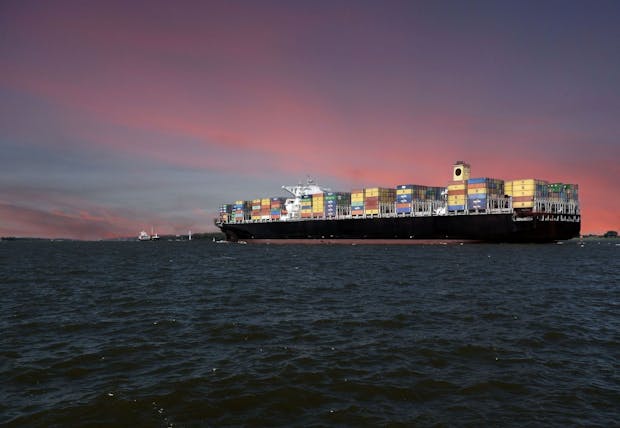
Guest Post: Shipping emissions must fall by a third by 2030 and reach zero before 2050 – new research

The shipping sector is in urgent need of decarbonisation. pxhere.com
Simon Bullock, University of Manchester; Alice Larkin, University of Manchester, and James Mason, University of Manchester

International shipping is a crucial part of the global economy – 90% of the world’s trade is transported by sea. But almost all ships use fossil fuels, and so the sector is also a major emitter of greenhouse gas pollution – with emissions roughly on a level with the entire nation of Germany.

Progress on cutting emissions in shipping has been slow. In fact, emissions are no lower now than they were ten years ago. The sector’s record is under scrutiny at COP26 – the latest UN climate summit in Glasgow. The International Maritime Organization (IMO) – the UN body charged with delivering international shipping’s strategy on tackling climate change – has a target to cut emissions by 50% by 2050. The UN Secretary General Antonio Guterres criticised this, arguing the IMO’s pledges are not aligned with the Paris Agreement’s goal of limiting global heating to 1.5°C, but are “more consistent with warming above 3°C”.

See also: To reach net zero, we must decarbonise shipping. But two big problems are getting in the way

Thursday, November 4, 2021

Guest Post: Global emissions almost back to pre-pandemic levels after unprecedented drop in 2020, new analysis shows

Shuttestock
Pep Canadell, CSIRO; Corinne Le Quéré, University of East Anglia; Glen Peters, Center for International Climate and Environment Research - Oslo; Pierre Friedlingstein, University of Exeter; Robbie Andrew, Center for International Climate and Environment Research - Oslo, and Rob Jackson, Stanford University

Global carbon dioxide emissions have bounced back after COVID-19 restrictions and are likely to reach close to pre-pandemic levels this year, our analysis released today has found.

The troubling finding comes as world leaders meet at the COP26 climate talks in Glasgow in a last-ditch bid to keep dangerous global warming at bay. The analysis was undertaken by the Global Carbon Project, a consortium of scientists from around the world who produce, collect and analyse global greenhouse gas information.

The fast recovery in CO₂ emissions, following last year’s sharp drop, should come as no surprise. The world’s strong economic rebound has created a surge in demand for energy, and the global energy system is still heavily dependent on fossil fuels.

Most concerning is the long-term upward trends of CO₂ emissions from oil and gas, and this year’s growth in coal emissions, which together are far from trending towards net-zero by 2050.

Saturday, October 30, 2021

Victoria reduces emissions by 24.8%, on track for 45-50% reduction by 2030

Victoria achieved a 24.8 per cent emissions reduction between 2005 and 2019 and the state’s annual emissions dropped below 100 megatonnes of carbon dioxide equivalent for the first time since 1994. This are pre-pandemic 2019 figures, and it is likely emissions have further declined during the pandemic. 

The results were contained in a report tabled in the Victorian parliament .

The Andrews government has met its legislated pledge to cut emissions by 20 per cent by 2020 ahead of schedule, and is on track to meet its target of a 28 to 33 per cent reduction below 2005 levels by 2025, and 45-50 per cent by 2030.

Tuesday, October 26, 2021

Morrison Net Zero 2050 Plan a fraud, with plans to double coal exports, new gas expansion

Energy and Emissions Reduction Minister Angus Taylor with 'Net zero Plan' slide

Prime Minister Scott Morrison accompanied by Energy and Emissions Reduction Minister Angus Taylor announced Australia's commitment to Net Zero by 2050. But there will be no change to the 26-28% emissions reduction target by 2030 that was submitted in 2015 to the Paris Agreement.

ABC political analyst Laura Tingle commented "All this time to wait for a 15 page slide set with literally nothing new in it...." and "The plan is based on our existing policies".

Australia is taking a technology not taxes meet and cheat projection to Glasgow, which is another way of climate delay and denial while expanding fossil fuel production

"You will be supported by our data projection that will see us exceed our 2030 target with emissions reduction of up to 35% by 2030. We will keep our commitment, though, when it comes to our pledge that we made, and took to the last election of 26 to 28%, but we will meet it, and we will beat it. And we’ll beat it with emissions reductions we believe about the 35%." said Morrison. 

Yeah the work of all the states will see Australia achieve 37-42% emissions reduction. Federal Government doing SFA according to modelling on 2030 climate targets.

"This is the right plan for Australia – to summarise the outcome from it, which we’ll see in the plan, Australians $2,000 better off on average in 2050 compared with no Australian action." says Angus Taylor. 

But acting fast with renewables with strong 2030 targets showed citizens would be $5000 better off according to Business Council of Australia report. Guardian Australia Politics Live

Find below Ministerial press release, video of the press conference, some twitter commentary, and statements by Opposition Leader Anthony Albanese and shadow Climate spokesperson Chris Bowen.

Wednesday, April 28, 2021

Biden Climate Summit: Australia Fails to Deliver, remains a global outsider and climate laggard

Here is a quick summary in graphic and point form where the main countries line up on climate commitments at the end of the Climate leaders summit organised by USA President Joe Biden in his first 100 days of leadership:


Prime Minister Scott Morrison made:
  • no change in Australia's low targets.
  • no commitment to net zero by 2050 target.
  • produced meaningless statistics that don't stack up
  • slagged off the work of other countries
  • talked up hydrogen without explaining much of this will be blue hydrogen from coal and gas
  • thanked some of Australia's highest emitting companies, part of the problem
  • tried to carve out emissions from our fossil fuel exports (Australia is 3rd largest carbon exporter)
  • talked up the hired help: Allan Finkel and his contribution (including to the gas led recovery)

Saturday, August 1, 2020

Zero net emissions targets and climate action plans need to be reflected in 2040 Hume Council Horizons Vision - Submission

My submission to the Draft City of Hume Horizons 2040 document to Hume Council. Quickly pulled together with 24 hours notice and submitted an hour before the midnight deadline. The Hume 2040 Horizons document can be read and tracked through the engagement process.

Friday, March 29, 2019

Melbourne Airport Runway expansion, risk management and aviation emissions


A Response from Australia Pacific Airport (Melbourne) to my questions on runway expansion and aviation emissions.

On my first question, regarding factoring in the possibility for development of east coast high speed rail and it's impact on flight projections, they utterly failed to answer my question.

This is a big fail in their risk management and in their corporate business model.

Sunday, March 17, 2019

Domestic Aviation emissions are booming while Melbourne Airport plans ignore climate risk management


Growth in domestic transport emissions compared: note aviation emissions growth is well ahead of other transport modes. Source: Charting Transport.com: Update on Australian transport trends (December 2018)


Melbourne Airport Corporation had a drop in session on 13 March at the Hume Global Learning Centre at Broadmeadows. I dropped in to raise that Melbourne airport needs to address aviation emissions growth as part of their business model for airport expansion. This also needs to be dealt with as part of their Risk Management Plan.

My presence sends a signal that Melbourne Airport Corporation need to start to address the issue of airport expansion inducing growth in aviation emissions and non-CO2 climate impact.

Saturday, January 12, 2019

Burning the carbon budget: the aviation emissions profligacy of Finance Minister Mathias Cormann


The silence on aviation emissions is deafening. And our politicians are some of the worst at exacerbating aviation emissions and climate impact from aviation.

Take Liberal Party Finance Minister Mathias Cormann for example.

His flight to Perth in June last year using a VIP jet for the forward journey contributed 9428 kg of CO₂e climate impact.

A return commercial flight business class amounts to 2355 kg of CO₂e climate impact.

The excess climate impact (and this is a very conservative figure) was 7073 kg of CO₂e climate impact.

This flight journey by Mathias Cormann was a rort at taxpayers expense and the expense of future generations through it's climate impact.

Wednesday, January 2, 2019

Australia performs very poorly in 2019 Climate Change Performance Index


Australia was ranked 55 out of 60 countries in the Climate Change Performance Index published in December 2018 during COP24 UN Climate Conference in Katowice, Poland.

The index shows only a few countries have started to implement strategies to limit global warming well below 2 or even 1.5°C. The countries of Sweden and Morocco are leading the field.

While there is a continued growth and competitiveness of renewable energy, especially in countries that had low shares before, the CCPI shows a lack of political will of most governments to phase out fossil fuels with the necessary speed.

Friday, September 14, 2018

Guest Post: Why our carbon emission policies don't work on air travel

Just came across this post from the Conversation from July 2018. It argues that there are two possibilities to reduce aviation emissions as part of an across the board reduction in Australian emissions.

Firstly, and given the difficulty of technological change, this will require that people fly less.

The second option is to be much more aggressive in reducing emissions in another sector, say electricity, where known solutions are far more viable and can be done relatively quickly.

"Airline emissions are likely to remain a difficult problem, but one that needs to be tackled if we’re to stay within habitable climate limits." the article concludes.

I would add that we need to consider demand management of flying through either taxing frequent flyers or using a personal carbon budget allowance system, both of which the airline and airport industry will strongly argue against but are far more equitable for constraining aviation demand. See Alice Bows Larkin assessment in the December 2014 research paper: All adrift: aviation, shipping, and climate change policy.

Wednesday, September 12, 2018

Aviation Emissions and Consultation on the Melbourne Airport Masterplan


Last night I attended the last public consultation on the Melbourne Airport Masterplan which involves substantial expansion of the terminals, roads and a future 2nd east-west runway. And complete silence on aviation emissions, except when I pushed the Environment Manger to reluctantly concede this impact.