Wednesday 10 November was designated transport day at the UN Climate conference COP26. After the energy sector, the transport sector needs to be decarbonised. Decarbonisation of electricity grids will substantially contribute and assist in reducing transport emissions.
The UK Government used their position as COP26 Presidency for 3 specific declarations, all areas that need to be addressed. But on public transport, e-mobility, cycling, and walking infrastructure and change in mobility behaviours very little.
UN Secretary General on Sustainable Transport (14 October)
The UN Secretary General Antonio Guterres slammed the IMO for its slow progress on shipping emissions at the Second Global Sustainable Transport conference on 14 October 2021:
“We must accelerate the decarbonization of the entire transport sector.
“Let’s be honest. While member states have made some initial steps through the International Civil Aviation Organization and the International Maritime Organization to address emissions from shipping and aviation, current commitments are not aligned with the 1.5-degree goal of the Paris Agreement.
“In fact, they are more consistent with warming way above 3 degrees.
“Adopting a new set of more ambitious and credible targets that are truly consistent with the goals of the Paris Agreement must be an urgent priority for both these bodies in the months and years ahead.
The priorities are clear:
- Phase out the production of internal combustion engine vehicles by 2035 for leading manufacturing countries, and by 2040 for developing countries.
- Zero emission ships must be the default choice, and commercially available for all by 2030, in order to achieve zero emissions in the shipping sector by 2050.
- Companies must start using sustainable aviation fuels now, in order to cut carbon emissions per passenger by 65 per cent by 2050.
- All stakeholders have a role to play, from individuals changing their travel habits, to businesses transforming their carbon footprint.
- Governments must incentivize clean transport options, including through standards and taxation, and impose stricter regulation of infrastructure and procurement.
“In developed countries, transport policies that encourage cycling and walking in urban areas, rather than driving short distances, can contribute to progress across the SDGs: on climate, health, pollution and more.
“Sustainable railway systems should be upgraded and expanded for medium and long-distance travel for people and goods, to increase efficiency and encourage shifts in behaviour.
“Second, we must close access and safety gaps.
“This means helping more than one billion people to access paved roads, with designated space for pedestrians and bicycles, and providing convenient public transit options.
“It means providing safe conditions for all on public transport by ending harassment and violence against women and girls, and reducing deaths and injuries from road traffic accidents.”
Cycling and related organisations have written an
open letter: COP26: Government leaders must commit to boosting cycling levels to reduce carbon emissions and reach global climate goals quickly and effectively. We have seen many cities already doing this, especially in Europe, but also North America.
The declaration calls for all governments and leaders at COP26 to:
- Declare commitments to significantly boost cycling levels at home. This can be done by:
- Promoting cycling in all its forms, including cycling tourism, sports cycling, bike sharing, riding to work or school and for exercising
- Recognising cycling as a climate solution, establishing a clear link between how an increase in bicycle trips and a decrease in private car trips reduce CO₂ emissions
- Creating and financing national cycling strategies and collecting data on cycling to know where improvements in infrastructure and usage can be made
- Focusing investments on building safe and high-quality cycling infrastructure and in incentives for communities historically marginalised from cycling
- Providing direct incentives for people and businesses to switch from automobiles to bicycles for more of their daily trips
- Building synergies with public transport and foster combined mobility solutions for a multimodal ecosystem capable of covering all user needs without relying on a private car
- Collectively commit to achieving a global target of higher cycling levels. More cycling in a handful of countries will not be enough to reduce global CO₂ emissions. All countries must contribute, and these efforts must be tracked at the UN level.
Climate Home news also pickup on this silence on public transport and active transport: As Cop26 car pledge underwhelms, delegates ask: where are the bikes?
COP26 declaration: zero emission cars and vans
The COP26 declaration on zero emission cars and vans is a landmark global agreement launched by the UK COP presidency to signal the end of polluting vehicles.
The declaration aims for all sales of new cars and vans being zero emission globally by 2040, and by no later than 2035 in leading markets
A. As governments, we will work towards all sales of new cars and vans being zero emission by 2040 or earlier, or by no later than 2035 in leading markets.
B. As governments in emerging markets and developing economies, we will work intensely towards accelerated proliferation and adoption of zero emission vehicles. We call on all developed countries to strengthen the collaboration and international support offer to facilitate a global, equitable and just transition.
C. As cities, states, and regional governments, we will work towards converting our owned or leased car and van fleets to zero emission vehicles by 2035 at the latest, as well as putting in place policies that will enable, accelerate, or otherwise incentivise the transition to zero emission vehicles as soon as possible, to the extent possible given our jurisdictional powers.
D. As automotive manufacturers, we will work towards reaching 100% zero emission new car and van sales in leading markets by 2035 or earlier, supported by a business strategy that is in line with achieving this ambition, as we help build customer demand.
E. As business fleet owners and operators, or shared mobility platforms, we will work towards 100% of our car and van fleets being zero emission vehicles by 2030, or earlier where markets allow.
F. As investors with significant shareholdings in automotive manufacturers, we will support an accelerated transition to zero emission vehicles in line with achieving 100% new car and van sales being zero emission in leading markets by 2035. We will provide proactive engagement and escalation of these issues with investees, coupled with encouraging all our holdings to decarbonise their fleets in line with science-based targets.
G. As financial institutions, we confirm our support for an accelerated transition to zero emission vehicles in line with achieving 100% new car and van sales being zero emission in leading markets by 2035, supported by making capital and financial products available to enable this transition for consumers, businesses, charging infrastructure and manufacturers.
H. As other signatories, we support an accelerated transition to zero emission vehicles in line with achieving 100% of new car and van sales being zero emission in leading markets by 2035.
Almost as a footnote, other forms of travel are included in this declaration:
We recognise that alongside the shift to zero emission vehicles, a sustainable future for road transport will require wider system transformation, including support for active travel, public and shared transport, as well as addressing the full value chain impacts from vehicle production, use and disposal.
Signatories
A. Governments
Austria, Azerbaijan, Cambodia, Canada, Cape Verde, Chile, Croatia, Cyprus, Denmark, El Salvador, Finland, Iceland, Ireland, Israel, Lithuania, Luxembourg, Netherlands, New Zealand, Norway, Poland, Slovenia, Sweden, United Kingdom
B. Governments in emerging markets and developing economies
Dominican Republic, Ghana, India, Kenya, Secretariat of Economy, Mexico, Morocco, Paraguay, Rwanda, Turkey, Uruguay
C. Cities, states and regional governments
Akureyri, Ann Arbor, Atlanta, Australian Capital Territory, Barcelona, Bologna, Bristol, British Columbia, Buenos Aires, California, Catalonia, Catamarca Province, Charleston, Dallas, Florence, Gangwon Province, Jeju Province, La Paz, Lagos, Los Angeles, New York, New York City, Northern Ireland, Quebec, Reykjavik, Rome, San Diego, San Francisco, Santa Monica, Sao Paolo, Scotland, Seattle, Sejong City, Seoul Metropolitan Government, Government of Sikkim, South Chungcheong Province, Ulsan Metropolitan City, Victoria, Wales, Washington (state)
NSW has also signed according to this SMH report
D. Automotive manufacturers
Avera Electric Vehicles, BYD Auto, Etrio Automobiles Private Limited, Ford Motor Company, Gayam Motor Works, General Motors, Jaguar Land Rover, Mercedes-Benz, MOBI, Quantum Motors, Volvo Cars
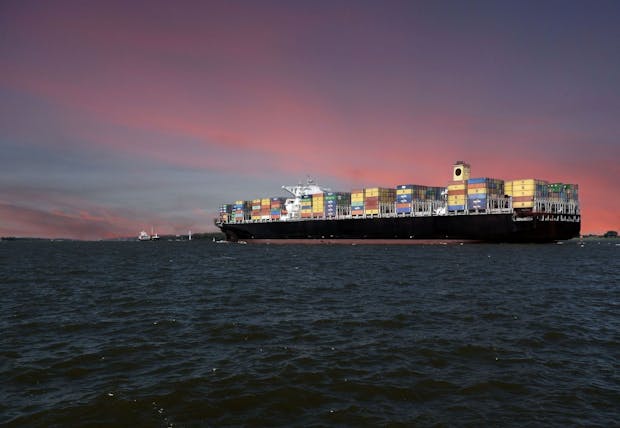
COP 26: Clydebank Declaration for green shipping corridors
States will support the establishment of green shipping corridors globally under the Clydebank Declaration launched at COP26. The central tenets of the Declaration are:
- support the establishment of green shipping corridors – zero-emission maritime routes between 2 (or more) ports.
- support the establishment of at least 6 green corridors by the middle of this decade
- aspiration to see many more corridors in operation by 2030
- facilitate the establishment of partnerships, with participation from ports, operators and others along the value chain, to accelerate the decarbonisation of the shipping sector and its fuel supply through green shipping corridor projects
Signatories: Australia, Belgium, Canada, Chile, Costa Rica, Denmark, Fiji, Finland, France, Germany, Republic of Ireland, Italy, Japan, Republic of the Marshall Islands, Morocco, Netherlands, New Zealand, Norway, Spain, Sweden, The United Kingdom of Great Britain and Northern Ireland, The United States of America
Urgent need to start decarbonising shipping
Latest research on urgent need to reduce shipping emissions by Simon Bullock, James Mason &Alice Larkin of the Tyndall Centre for Climate research, published 27 October in the Climate Policy journal, shows the gap between present IMO actions and what is required to meet Paris Agreement targets for shipping.
The declaration failed to call on greater ambition in shipping.
Shipping emissions are globally equivalent to a mid sized developed nation such as Germany.
Because of long ship life lead times, we can't afford to wait.
The article concludes that significantly stronger short- and longer-term targets need to be set for the sector to be compatible with the Paris Agreement’s goals: 34% reductions on 2008 emissions levels by 2030, and zero emissions before 2050, compared with the sector’s existing target of a 50% cut in CO2 by 2050. Crucially, strengthening the target by the IMO’s strategy revision date of 2023 is imperative. The long asset lifetimes of ships and shipping infrastructure limit the speed of transition such that a delay of even a few years will dictate an untenable rate of decarbonization and increased risk of pushing the already challenging Paris goals out of reach.
 |
| A decade of no progress at @IMO_HQ in cutting shipping emissions means the only feasible pathway remaining is the green one - with linear reductions to zero from 2023. |
Key policy insights
- There is a gap between targets set out in the IMO’s Initial Strategy and what is needed by the shipping sector to be Paris-compliant.
- Paris-compliant targets require a 34% reduction in emissions by 2030, with zero emissions before 2050. Existing targets imply no absolute reduction in emissions to 2030, and only a 50% reduction by 2050.
- The longer the delay in setting new targets, the steeper subsequent decarbonization trajectories become. Delay beyond 2023 would necessitate an untenably rapid transition, given long shipping asset lifetimes and global requirements for new land-side infrastructures, increasing the mitigation burden on other sectors.
COP26 in November 2021 is an opportunity for the shipping sector to signal its intent to strengthen its targets, and to implement this in its 2023 strategy revision process, at the latest.
COP 26 declaration: International Aviation Climate Ambition Coalition
Countries commit to ambitious action on international aviation emissions, including through a new global goal and promotion of cleaner fuels and technologies.
There has been much criticism of this declaration, that it fails to bring the ambition necessary for addressing aviation emissions and climate impact. Read the critiques at Blog: Civil aviation High Ambition emissions reduction at COP26? yeah nah just more greenwashing, blah, blah , blah - back to you ICAO
Stay Grounded has a Petition to the UN climate convention, the International Civil Aviation Organisation, the EU Commission, EU Parliament, and national governments: to Stop Greenwashing — Reduce Air Traffic Now!
Signatories to the declaration included: Burkina Faso, Canada, Costa Rica, Finland, France, Ireland, Japan, Kenya, Maldives, Morocco, Netherlands, New Zealand, Norway, Republic of Korea, Spain, Turkey, United Kingdom, United States of America.
References: