Friday, January 3, 2014
Volcanic activity adds further to instability of West Antarctic Ice Sheet
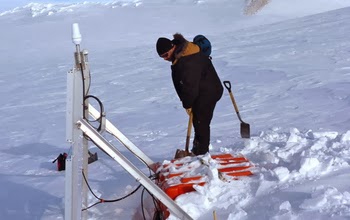
The West Antarctic Ice sheet is buttressed by huge ice shelves at it's edges which hold back the ice streams. Warming Southern ocean currents are melting ice shelves, causing them to retreat, allowing faster discharge of ice flows from the interior. Much of the ice sheet is grounded on a sub-glacial basin below sea level, so as the ice shelf grounding line retreats, more warm water can interact with the ice to speed the discharge and collapse of the ice sheet. Volcanic activity adds further potential instability to this process.
Monday, March 4, 2013
Moderate Volcanic activity slowing global warming by 25% suggests study
Atmospheric warming has slowed over the last decade, and scientists from the University of Colorado at Boulder believe the cause of this may be all the small to medium volcanic eruptions spewing sulphur dioxide high into the atmosphere where it changes the reflectivity of the top of the atmosphere.It is well established that major volcanic eruptions like Mount Pinatubo in the Philippines in 1991 emit millions of tons of sulphur dioxide that effectively cool the earth slightly for several years. It has also been theorised that the stagnation in global warming in the mid twentieth century was caused by the atmospheric nuclear testing carried out between 1945 and 1980. It seems that nuclear winter actually occurred, although on just a small scale. A small nuclear war would also likely cause global cooling through the amount of particulate matter thrown up into the stratosphere. But really this is not something to even contemplate happening due to the amount of death and devastation involved.
Scientists have theorised that other reasons for the slowing in the rate of atmospheric global warming over the last decade is that a greater proportion of heat is being taken up by the world's oceans; and secondly that Asia, particularly India and China, have increased their sulphur dioxide emissions from coal fired power by 60% between 2000 and 2010 which has increased the stratospheric aerosol layer of the atmosphere changing the reflectivity.
