Temperature records tumble during winter in Tasmania in July. And Sydney set a new warmist July record. It seems July temperature records aren't only being broken during the northern hemisphere heatwaves, but also in the depths of winter season in Australia.
In Tasmania:
statewide mean maximum temperature was 1.40 °C above the 1961-1990 average, the warmest on record.
statewide mean minimum temperature was 2.63 °C above the 1961-1990 average, the warmest on record since observations begun in 1910.
Minimum temperatures were more than 8 °C higher than average for parts of the north-east on the 8th.
13th July particularly warm. Many sites had their highest daily minimum temperature for July on record.
Hobart had its warmest July night on record reaching 13.0 °C (137 years of observations).
"For Tasmania, the July statewide mean maximum temperature was 1.40 °C above the 1961-1990 average, the warmest on record. For New South Wales this July was the fourth-warmest on record, for Victoria the sixth-warmest on record and for South Australia the tenth-warmest on record."
"Tasmania's statewide mean minimum temperature was 2.63 °C above the 1961-1990 average, the warmest on record since observations begun in 1910. For Queensland this July was the seventh-warmest on record."
"much of Tasmania had a very warm night on the 13th. Many sites had their highest daily minimum temperature for July on record. Hobart had its warmest July night on record reaching 13.0 °C (137 years of observations)."
This follows a warm June with temperature and rainfall records falling:
A couple of sites had their highest June temperature on record and a couple of others their highest daily minimum temperature on record on the 17th due to a prevailing and warm north to north-westerly airstream.
A few sites had their highest June daily rainfall on record and a couple their highest total June rainfall on record.
A new website uncovers the aviation emissions associated with 1300 airports globally, covering 99 per cent of passenger flights. Twenty four of those airports are located in Australia producing carbon emissions equivalent to five coal fired power stations.
The aviation sector would have been the sixth-largest emitter of CO₂ in 2018 if it were a country, responsible for 2.5 per cent of global emissions. Up until the pandemic aviation was growing 5 per cent annually since 2013. Despite the disruption caused by the pandemic, the sector remains off-track for limiting global heating to 1.5ºC.
Aviation emissions for the website is based on data from 1300 airports from 2013, 2018, 2019. The website was a joint project by the International Council on Clean Transportation (ICCT), International Think Tank ODI, and Transport and Environment (T&E).
This is the first global attempt to focus on the infrastructure that enables and induces air travel and leads to more CO₂ emissions in future decades.
The Is it hot right now? website provides a daily view on daily average temperatures for Australian capital cities, comparing the average temperature to it's history for that day, to see where it sits in the distribution of temperatures typical for the time of year.
The site was developed by climate researchers Mathew Lipson, Steefan Contractor and James Goldie. The data comes from the Bureau of Meteorology's ACORN-SAT.
Mat Lipson provided the Yearly average temperature charts and the 2018 heat maps for each city. The trend in rising temperatures is clearly visible in each. I have added details for each city of future projections done by CSIRO in 2015.
In the year heat maps for each city you can still see the fluctuations in temperature due to weather events, but the cold days (blue) are getting rarer, and the hot days (red) are getting more common, a telling sign of the long term climate temperature trend affecting all regions of Australia.
The Bureau of Meteorology in the lead up to christmas in 2018 showed a heatwave building through the week. The forecast was for severe and extreme heatwave impacts particularly Thursday 27 December to Saturday 29 December.
A blocking high in the Tasman and strong heat from the Pilbara in Western Australia and right through Central Australia, will periodically extend tendrils of sweltering heat to encompass the major population centres of Adelaide, Melbourne and Sydney.
While these cities may get occasional relief from weak cold fronts and coastal sea breezes, inland towns will swelter in the scorthing heat with temperatures in the mid to high 30s and low 40s.
The Powering Past Coal Alliance announced on Friday that Sydney and Melbourne had joined the Alliance at an event: Accelerating the global coal transition. This follows the Australian Capital Territory joining in September 2018. Other states and businesses that joined at COP24 included Israel, Scotland, Senegal, and Scottish Power.
The Alliance, formed in Bonn in 2017 at COP23, now includes 80 members including national governments, state or regional governments, cities, and businesses.
Canada's Environment Minister Catherine McKenna Made the announcement.
I have been very concerned about rising temperatures and the urban heat island effect on the people in our cities, particularly Melbourne and the City of Moreland where I live. See Climate change and heatwaves in Melbourne - a Review. Moreland Council have been one of the more pro-active local governments in reducing emissions, ameliorating the urban heat island effect through an urban forest strategy, and in working towards adaptive changes by the population of Moreland in dealing with impacts of extreme heat. Liz Hanna puts this together in the dilemmas we will face in future years as temperatures continue to rise.
The reality of living with 50℃ temperatures in our major cities
Sydney is facing 50℃ summer days by 2040, new research says. Andy/Flickr/Wikimedia Commons, CC BY-SA
Australia is hot. But future extreme hot weather will be worse still, with new research predicting that Sydney and Melbourne are on course for 50℃ summer days by the 2040s if high greenhouse emissions continue. That means that places such as Perth, Adelaide and various regional towns could conceivably hit that mark even sooner.
This trend is worrying, but not particularly surprising given the fact that Australia is setting hot weather records at 12 times the pace of cold ones. But it does call for an urgent response.
Most of us are used to hot weather, but temperatures of 50℃ present unprecedented challenges to our health, work, transport habits, leisure and exercise.
Humans have an upper limit to heat tolerance, beyond which we suffer heat stress and even death. Death rates do climb on extremely cold days, but increase much more steeply on extremely hot ones. While cold weather can be tackled with warm clothes, avoiding heat stress requires access to fans or air conditioning, which is not always available.
The death rate in heat ramps up more rapidly than in cold. Data from Li et al., Sci. Rep. (2016); Baccini et al., Epidemiol. (2008); McMichael et al., Int. J. Epidemiol. (2008), Author provided
Even with air conditioning, simply staying indoors is not necessarily an option. People must venture outside to commute and shop. Many essential services have to be done in the open air, such as essential services and maintaining public infrastructure.
Roughly 80% of the energy produced during muscular activity is heat, which must be dissipated to the environment, largely through perspiration. This process is far less effective in hot and humid conditions, and as a result the body’s core temperature begins to climb.
We can cope with increased temperatures for short periods – up to about half an hour – particularly those people who are fit, well hydrated and used to hot conditions. But if body temperature breaches 40-42℃ for an extended time, heat stress and death are likely. In hot enough weather, even going for a walk can be deadly.
Air conditioning may not save lives
We expect air conditioning to take the strain, but may not realise just how much strain is involved. Shade temperatures of 50℃ mean that direct sunlight can raise the temperature to 60℃ or 70℃. Bringing that back to a comfortable 22℃ or even a warm 27℃ is not always possible and requires a lot of energy – putting serious strain on the electricity grid.
Electricity transmission systems are inherently vulnerable to extreme heat. This means they can potentially fail simply due to the weather, let alone the increased demand on the grid from power consumers.
Power cuts can cause chaos, including the disruption to traffic signals on roads that may already be made less safe as their surfaces soften in the heat. Interruptions to essential services such as power and transport hamper access to lifesaving health care.
Myopic planning
It’s a dangerous game to use past extremes as a benchmark when planning for the future. The new research shows that our climate future will be very different from the past.
Melbourne’s 2014 heatwave triggered a surge in demand for ambulances that greatly exceeded the number available. Many of those in distress waited hours for help, and the death toll was estimated at 203.
The health sector is concerned about Australia’s slow progress and is responding with the launch of a national strategy for climate, health and well-being. Reinstating climate and health research, health workforce training and health promotion are key recommendations.
There is much more to be done, and the prospect of major cities sweltering through 50℃ days escalates the urgency.
Two key messages arise from this. The first is that Australia urgently needs to adapt to the extra warming. Heat-wise communities (or “heat-safe communities” in some states) – where people understand the risks, protect themselves and look after each other – are vital to limit harm from heat exposure. The health sector must have the resources to respond to those who succumb. Research, training and health promotion are central.
Averaged across the state, Queensland had its 6th warmest January on record. Mean minimum temperatures were the second-warmest on record for January. (see above deciles average map for January)
But the City of Brisbane in the south east just experienced it's warmist January on record. Back to back heatwaves have brought persistent heat to south east Australia, and especially to southern Queensland and New South Wales. The town of Moree has had 36 consecutive days of temperatures over 35C, doubling the previous record of 17 days in 1982.
The Prime Minister's electorate of Wentworth in Sydney played host to a Solar Citizens forum at Paddington Town Hall: the Wentworth 100 percent renewables forum. Former MP for Wentworth John Hewson turned up and gave the keynote address.
Wentworth is one of the wealthiest electorates in Australia, but it also has the second lowest uptake of solar PV in Australia.
The Paddington Town Hall was used for the forum and had a packed audience. Though Malcolm Turnbull, the member for Wentworth, couldn't make it, the organisers kept a chair vacant on stage with his name on it.
Updated: 10 June 2016: Details of climate attribution of French extreme rainfall and flood event
Over the last week we have seen extensive flooding around central France and southern Germany, and the impact of an East coast Low on Australia. They are different weather events but they share a certain commonality in being disastrous intensive rainfall and flood events resulting in death and damage.
The French extreme rain and flood event has recently been attributed to climate change, while the extreme nature of the East Coast Low has not yet been studied for event attribution. Attributing single events to climate change can be statistically difficult due to the range of climate variability. The damage and destruction of both events are consistent with increasing climate trends of greater intensity of rainfall and flood events around the world due to climate change.
While Prime Minister Turnbull and Opposition leader Shorten stayed well clear of mentioning climate change with regards to the extreme rainfall and flooding event in Australia, the French President was far less circumspect, exclaiming (fr) at a press conference that the extreme rainfall and flooding event in France emphasized the importance of the fight against global warming.
"When there are climatic phenomena of this severity, we must all be aware that it is across the world that we must act," he added. "The weather of this magnitude, with people who have been forcibly displaced with emergency relief interventions necessary, is not just a phenomenon that affects only France. It also concerns victims in Germany and Poland," he noted during a press statement with Chilean President Michelle Bachelet.
A meeting of nearly a 1,000 city mayors from around the world meeting in Paris signed a declaration on Friday that supports a municipal transition to 100 percent Renewable Energy. Read the declaration (PDF)
Paris Mayor Anne Hidalgo said according to a report on Citiscope, "As I told the negotiators when bringing them our contribution, cities are not waiting for them to give us the solution," she said. "We are moving ahead and making a solution possible."
The early spring heatwave has brought a taste of summer extreme heat and bushfires across the continent setting new early season temperature records with temperatures anomolies of 12 degrees C and more over much of southern Australia, particularly Victoria.
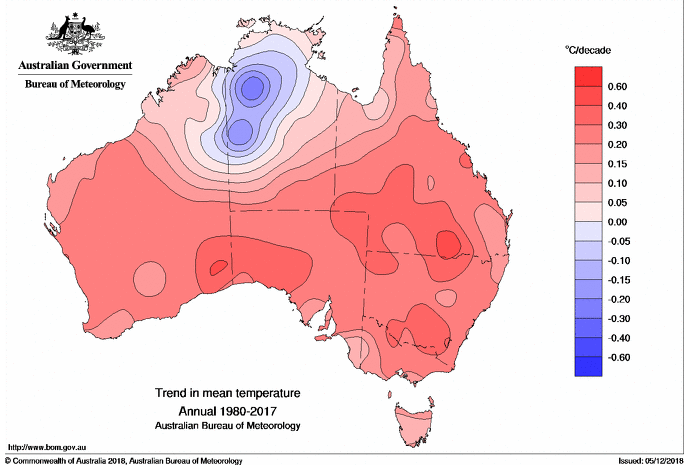
This comes as a powerful El Nino is taking place in the Pacific which acts to boost temperatures and drought conditions in Australia. And all this takes place in a hotter environment with Australia having warmed by 0.9 degrees from 1910.
The Bureau of Meteorology have issued a statement on October 7 which advises that the Indian Ocean Dipole has turned positive which will reinforce the El Nino impact on Australia.
Unable to attend Naomi Klein's talk at the Festival of Dangerous Ideas on Capitalism and Climate, I watched it live streamed via Getup and commented via twitter using the Climate Action Moreland account (@Camoreland). (Photo by @1millionwomen)
It was an historic speech both inspiring and motivating us for a more caring society, for us to make the leap and change the whole system, not just a slow piecemeal approach tweaking a few economic levers to reduce the worst climate impacts but still leave the substantial racism and inequality inbuilt in the system.
Though a feminist from a jewish cultural background, Klein urged us to read the Pope's latest encyclical, Laundato Si. Though Klein does not mention this, there has also been an Islamic declaration on Climate Change issued in August.
Klein implores us to be honest, bold and generous. As the politics is not now working, to change the politics. We need to change the system so that it works for the benefit of all. Watch the youtube video (58 mins) below:
Here is my storify which collates tweets from the 2,500 people present at the Sydney Opera House with people watching via live streaming and interacting via twitter.
While there are few complaints about the super mild autumn temperatures, new temperature duration records are being set across large parts of south eastern Australia.
Professor Will Steffen has now written a report - Climate Council Seasonal Update: Abnormal Autumn 2014 - in which he details that the 24 months to April 2014 were the hottest two year period on record, and due to the abnormally warm weather in May, the 24 months to May 2014 is likely to eclipse this record. With an El Nino brewing in the Pacific we are likely to have elevated temperatures through winter and spring which will influence soil moisture and other factors involved in increasing the number of extreme fire weather days with a longer fire season in southern regions later this year.
Weather Bureau releases special climate statement - 30 May 2014
The Bureau of Meteorology has released special climate statement 49 (PDF) summarising the autumn May warmspell. A persistent blocking high in the Tasman brought the warm period, but comes on top of a trend for hotter than usual periods:
The current warm event is the latest in a sequence of prolonged or intense warm spells that have affected a large part of the continent roughly every six weeks since the end of 2012. This coincides with record-breaking or well-above-average temperatures that have persisted across Australia for the past 22 months. The 12 months ending January 2014, February 2014, March 2014 and April 2014 have all been record-warm for Australia. It is virtually certain that the 12 months ending May 2014 will also set a new high record.
The year-to-date (January to May) temperature anomaly for Australia at 31 May 2014 is expected to be near +0.95 °C. This will mean that 2014 ranks in the top five warmest starts to a year on record behind 2005 (+1.17 °C), 1998 (+1.05 °C), 2013 (+1.04 °C) and 2007 (+0.96 °C).
The continental averaged daily maximum temperature was 27.35 °C or above on each of the five days from 21 to 25 May. The previous area record after this date was 27.23 °C on 23 May 1958. Daytime average temperatures were 4 to 6 degrees above average over over a large area encompassing most of South Australia, the western half of New South Wales, northwestern Victoria, southwestern Queensland and the southern Northern Territory.
Usually with warm spells of this type in Autumn night time temperatures remain average or are cooler than normal due to cloud free nights radiating the day's energy.
Minimum temperatures for this period (Figure 2) were also above average over most of the continent, except for parts of the New South Wales tablelands and the Kimberley region in the north of Western Australia. The largest anomalies, 4 to 6 °C above average, occurred in the South Australian outback and adjacent border areas of Western Australia and the Northern Territory.
Indeed, special mention is made for one night in Melbourne where the temperature climbed to 22C at 4.30am before falling:
A particularly unusual occurrence was the abnormal warmth in the Melbourne area in the early hours of the morning of 27 May, as northerly winds strengthened ahead of an approaching front. The Melbourne temperature rose to 22.1 °C around 4.30 am, which was only 0.3 °C short of the highest maximum temperature ever observed so late in the season. (It subsequently cooled below 18 °C after 6.30 am, preventing any records being set for high overnight minimum temperatures.)
With the blocking high in place bringing warmth to much of central and eastern Australia, the south west saw more cold fronts bringing rain resulting in southwestern Western Australia having its wettest May since 2005. "Pemberton experienced 23 consecutive days with rainfall from 7 to 29 May, a May record, and numerous other sites in the region had 20 to 22 days with rainfall during this period." said the BOM statement.
Some of the records broken
Sydney - 19 consecutive days of 22 °C or above from 10 to 28 May (previous record of 9 days from 1 to 9 May 1978 and 1 to 9 May 2007).
Sydney - 25 days for most consecutive days of 20 °C or above.
Adelaide - 16 days for most consecutive days of 20 °C or above.
Melbourne - 13 days for most consecutive days of 20 °C or above.
Wilsons Promontory - 6 consecutive days of 20 °C or above. (No previous instance in May of a spell of more than 3 consecutive days of 20 °C or above, and only one 7 day spell in April in 1970)
Victoria - 9 consecutive days from 14 to 22 May with a statewide mean maximum above 20 °C, matching the record set from 1 to 9 May 1972.
Campania (Tas) - 24.1 °C observed on 15 May, highest maximum temperature so late in the season for any Tasmania site.
Ouyen (Vic) - 27.4 °C on 26 May, highest maximum temperature so late in the season for Victoria.
Birdsville (Qld) reached 34.7 °C highest maximum temperature of the event outside the tropics.
Hobart - 23.9 on 15 May highest maximum temp on same or later day (previous 22.6 16/5/1947)
Hobart - 14.9 on 19 May highest minimum on same or later day (previous 14.5 (24/5/2000,
31/5/1976)
Canberra - 21.7 on 26 May highest maximum temp on same or later day (previous 20.1 (29/5/1954, 3 and 4/6/1957)
25 May 2014:
Sydney has just posted its longest Autumn warm spell for May going back to records which started in 1910. Saturday was the 14th day in May where the maximum temperature exceeded 22 degrees smashing the old record of 6 days. Average maximum temperatures will also beat the existing record for May - 22.7 degrees set in 1958 - according to Ben Domensino, a senior meteorologist at Weatherzone as reported by the Sydney Morning Herald. Melbourne also has experienced abnormally mild temperatures with May 2014 exceeding May 1972 for the most days with temperatures over 20 degrees.
Canberra has also exceeded a 67-year-old record for a late-autumn heatwave last Thursday, when temperatures passed 17 degrees for the 11th consecutive day. Weatherzone meteorologist Max Gonzalez said the city had been experiencing above average day time temperatures and cooler than average nocturnal temperatures, "The average overnight temperature in Canberra this month has been 1.5 degrees which is 1.6 below the usual average," he said. "But during the day we’re averaging temperatures of 16.8 which is 1.2 degrees warmer than the monthly average." reported the Sydney Morning Herald.
The warmer than usual weather has also caused algae blooms in Lake Burley Griffin and Lake Tuggeranong forcing there closure for swimming. Adelaide's top of 27.4 degrees was that city's warmest on record this late in the season, while Hobart's 23.9 degrees on Thursday was that city's warmest so deep into autumn. Both cities' records go back more than a century, said Blair Trewin, a senior climatologist at the Bureau of Meteorology as reported by the Age.
The Snowy Mountains skifields are also decidedly still green even though the start of the ski season is fast approaching on the June Queens birthday weekend. Temperatures at most ski resorts are still above zero, still too warm to even start the snowmaking machines. Australia’s alpine zones have been identified as one of six key regions that are highly vulnerable to climate change. There has already been a substantial reduction in snow, and by the end of this century it is projected most snow will be gone. This will have a large affect on the shrinking size of the alpine ecosystems, not to mention ski resort tourism.
Increased temperatures during this Autumn heatwave may have implications for later in the year according to Climate scientist Dr Sarah perkins, as reported in the Sydney Morning Herald. Raised temperatures increase plant growth adding to fuel loads, but also help to dry out soils raising the prospect for more intense fires and droughts later in the year if dry conditions persist. Signs of an impending El Nino may also contribute to drought and a more intense and lengthy bushfire season in the later part of 2014. There are several signs the El Nino may match the strenth and intensity of the 1997/1998 El Nino.
This comes as NOAA announced that April 2014 tied with 2010 as the hottest April on record. According to NOAA:
The globally-averaged temperature across land and ocean surfaces tied with 2010 as the highest on record for the month, at 0.77°C (1.39°F) higher than the 20th century average. This also ties with April 2010 as the seventh highest departure from average among all months in the period of record, which dates back to January 1880. The record highest departure is 0.86°C (1.55°F) above average, set in February 1998, a month when El Niño conditions had been present for nearly a year. Neither El Niño nor La Niña have been present in the east central equatorial Pacific Ocean for the past two years; however, according to NOAA's Climate Prediction Center, the chance of El Niño emerging increases for the remainder of 2014, exceeding 65 percent during the Northern Hemisphere summer 2014.
The NOAA report also noted that average temperatures for Australia in April were high:
Australia observed its seventh highest average April temperature since records began in 1910, at 1.12°C (2.02°F) higher than the 1961–90 average. The average minimum temperature was fourth highest for April, at 1.32°C (2.38°F) above average, with Queensland setting a new record high monthly minimum for the state.
More than 60,000 people are estimated to have rallied or marched for climate action across Australia in a demonstration that a significant number of people view climate change as a serious issue requiring substantive action from all levels of Government, including the Federal Government lead by cinservative Prime Minister Tony Abbott.
The rallies were organised by GetUp, the Australian Youth Climate Coalition and the Australian Conservation Foundation.
The protest comes as the bills to dismantle Australia's carbon price and funding subsidies for renewable energy are introduced into Federal parliament on Monday. If successful, Australia would become the first country to rill back a functioning carbon pricing mechanism.
In a radio interview with Neil Mitchell, Australian Prime Minister Tony Abbott said that the Head of the UNFCCC, Christiana Figueres, is "talking through her hat" for connecting the NSW bushfires with climate change and that "these fires are certainly not a function of climate change, they are just a function of life in Australia."
It seems Mr Abbott is in denial on all the wildfire research done on the increase in fireweather and increase in frequency and intensity in bushfires both in Australia and globally.
Abbott articulated a list of major bushfire disasters in Australia as justification that climate change is not involved. Yet the science clearly shows the long term climate change trend for rising temperatures, with increasing frequency of heatwaves drying out forests and grasslands and driving reductions in humidity and soil moisture making extreme fireweather and bushfires more frequent and more intense.
After two days of milder weather temperature and wind conditions are again worsening over the next few days. The fear is that the multiple fires through the Blue Mountains could link up to form a mega conflagration imperiling all the mountain communities that nest along the Great Western Highway. The fire could funnel down the Grose Valley joining the Springwood fire and crossing the Hawkesbury River to threaten the Richmond and Penrith districts of Western Sydney.
The Premier of NSW Barry O'Farrell on Sunday declared a 30 day State of Emergency which will give additional powers to emergency personnel in ordering evacuations and combatting the bushfires. An indefinite total fire ban has also been declared for Sydney, Hunter, Illawarra/Shoalhaven & Central Ranges.
It is now the 7th time this bushfire season a total fire ban has been declared in Sydney. Very Unusual. If the fire weather is this bad so early in the season, it can get worse over the coming months as Summer heats up, especially if we have extreme summer heatwaves similar to 2013. Here is the 2013/2014 bushfire outlook from the Bushfire CRC:
A new scientific study finds that Sydney faces hotter temperatures due to the interaction of expanding urbanization, climate change and the urban heat island effect
The study - Temperature response to future urbanization and climate change (abstract) - highlights the combined impact of both new urbanization and climate change on near-surface temperatures for greater Sydney, with positive feedbacks between urban expansion and global warming at the local scales. While Maximum daytime temperatures (Tmax) for Sydney are projected to only increase slightly and mostly in the winter, most of the change will be seen in substantial increases in nigt-time temperatures (Tmin), particularly in Spring and Summer months.
Urban expansion in Western Sydney is creating a multitude of new estates on Sydney's fringes expected to house more than 100,000 residents. These new urban areas are likely to experience the largest rises in temperature of up to 3.7 degrees Celsius by 2050 due to the interaction of land use change, global warming and the urban heat island effect.
The Urban Heat Island effect (UHI) is a well known and studied phenomenon which says that the built urban environment increases local temperatures, while reducing the opportunity for evapo-transpiration for cooling.
On Sunday around 300 residents rallied in Campbelltown in western Sydney and called on the NSW state government and Federal Government to protect drinking water and drinking water catchments, and for local communities to protect their farmland and water resources from Coal seam gas (CSG) development. Jess Moore from Stop CSG Illawarra spoke passionately and outlined the campaign to stop coal seam gas mining in Sydney's water catchments and the threat it poses to the millions of people who live in greater Sydney area. Here is her speech with transcription.
The meeting also heard from several other speakers, including Campbelltown City councillor Fred Borg who said "If it is not safe, it's not safe. We say here today stop coal seam gas. If it is not safe in Campbelltown or Macarthur, it's not safe anywhere else. In NSW, nor for that matter in Australia." Watch on youtube.
"Allowing BHP to undermine our drinking water supply defies common sense and breaches a personal commitment by Premier O'Farrell to prevent mining in drinking water catchments," Nature Conservation Council of NSW Chief Executive Officer Pepe Clarke declared on Tuesday with the announcement that approval had been given to BHP Billiton's Mount Kembla Dendrobium coal mine to extend under part of Sydney's water catchment.
On Monday 11 February the New South Wales State Government Department of Planning and Infrastructure gave approval to BHP Billiton's Mount Kembla Dendrobium Area 3B long wall mine extension plan. This involves several underground excavations directly under Sydney's Woronora water catchments. The approval was strongly criticised by conservationists including Total Enviropnment Centre director Jeff Angel, and the NSW Conservation Council Pepe Clark who accused the Premier Barrie O'Farrell of breaking a key pre-election promise of not to mine in Sydney's catchments.