Mastodon Climate Citizen --> Mastodon
Showing posts with label solar. Show all posts

Sunday, May 14, 2023

Guest Post: Despairing about climate change? These 4 charts on the unstoppable growth of solar may change your mind

Shutterstock

Andrew Blakers, Australian National University

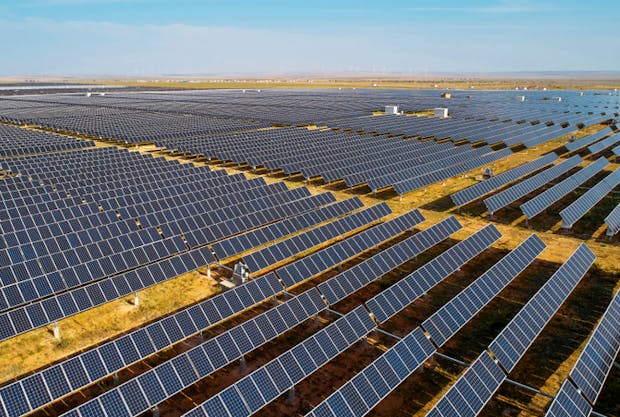
Last year, the world built more new solar capacity than every other power source combined.

Solar is now growing much faster than any other energy technology in history. How fast? Fast enough to completely displace fossil fuels from the entire global economy before 2050.

The rise and rise of cheap solar is our best hope for rapidly mitigating climate change.

Total solar capacity tipped over 1 terawatt (1,000 gigawatts) for the first time last year. The sector is growing at around 20% a year. If this continues, we’ll hit 6 terawatts around 2031. In capacity terms, that would be larger than the combined total of coal, gas, nuclear and hydro.

Saturday, September 17, 2022

Natural gas, Methane emissions reduction and the need to implement methane removal

Image: large scale methane removal possible via atmospheric solar photocatalysis wind chimney

What was I doing at 4am on a Friday morning? Watching a Methane Action (US NGO) organised webinar (1) on methane reduction and methane removal.


This webinar had Sir David King, a former chief scientist for the UK, doing a presentation. I first came across Sir David King's statements on the approaching climate crisis around 2004.(2)

Tuesday, February 28, 2017

Solar Feed-in minimum tariff to double for Victorian Solar citizens


The minimum Feed-in tariff for solar PV owners in Victoria will more than double due to changes the Dan Andrews Labor Government has made to the regulation of pricing for solar PV owners.

Current minimum feed-in rate is 5 cents per kilowatt hour. Victoria’s independent regulator, the Essential Services Commission (ESC), has determined the new feed-in rate will be 11.3 cents per kilowatt hour and will apply from 1st July.

About 130,000 solar citizens will reap the benefit of this increased Feed-in tarriff.

“With this new feed-in tariff, the Andrews Labor Government is ensuring that households with solar panels are more fairly compensated for the power they send back into the grid.” said Minister for Energy, Environment and Climate Change Lily D’Ambrosio.

Thursday, January 19, 2017

Solar to power Melbourne's trams as Australia's GHG emissions continue to rise


Article first published at nofibs.com.au

Lily D'Ambrosio, the Victorian Energy and Environment Minister, stepped forward today to announce that Melbourne's tram network will be powered by 100 per cent Solar. Not directly of course. But the government will issue a tender for a new 75MW capacity large scale solar farm to supply the equivalent power needed for the tram network to the electricity grid.

The Government will voluntarily surrender renewable energy certificates matching the amount of electricity used by all of Melbourne’s trams.

About 35MW from the solar farm will be allocated for powering the tram network. “We’ve got the biggest tram network in the world and we’re powering it with renewables and creating local jobs.” said Transport Minister Jacinta Allan.

Monday, December 19, 2016

Installing #Solarhotwater makes both financial and climate sense


I came home from attending #COP22 in Marrakech only to have my gas-boosted hot water system die a week or so later. A good opportunity to upgrade to an electric boosted solar hot water service to increase household energy efficiency and reduce emissions, although lousy timing for my Christmas finances.

Wednesday, October 26, 2016

New Victorian Solar Feed-in Tariffs to recognise Greenhouse gas avoidance


First published at Climate Action Moreland.

New solar feed-in tariffs (FIT) are being introduced by the Andrews Labor government in Victoria, based on the time-of-day - peak, off-peak and shoulder – which better reflects current electricity pricing. The new tariff structure will also compensate solar households with a tariff component taking into account the environment value of greenhouse gases avoided.

Minister for Energy, Environment and Climate Change Lily D’Ambrosio announced the changes as a fairer way to pay people for the solar and wind power they produce for the electricity network.

“Victorians should be fairly compensated for the power they generate – plain and simple.” said Lily D'Ambrosio. “Households will now be compensated through the most cost effective and fairest system available, which is through a time-of-use feed-in tariff.”

Tuesday, September 13, 2016

Solar thermal for South Australia? Solar Reserve says 6 power stations may be built


Originally published at nofibs.com.au

Solar Reserve has a plan to build a solar thermal power station with 8 hours molten salt storage at Port Augusta which would diversify South Australian electricity generation, bringing jobs and solar innovation to the state.

A report in the Adelaide Advertisor says that once the first power station is built with locked in long term contracts and finances, a further 5 solar thermal power stations of a similar size could be built across the north of the state. Leigh Creek, Woomera, Whyalla, and Roxby Downs have all been identified as possible sites. This would then amount to about 650MW capacity, as much as the expanded interconnector with Victoria.

Monday, September 12, 2016

ARENA briefly made Australia a world leader in renewables R&D. Time to #SaveARENA


Australian Renewable Energy Agency (ARENA) is facing a huge funding cut of $1.2 billion as part of the budget omnibus the Federal Government wants to pass. It is responsible for providing seed funding for innovative renewable energy projects. The latest funding round has just been released. It features substantial seed funding for 12 major solar projects and builds on innovative seed funding for renewables projects in previous years.

According to the Guardian, "The only time in Australia’s recent history that research and development for renewables outstripped R&D for fossil fuels was when the Australian Renewable Energy Agency (Arena) began making grants to renewables in 2013, the study of International Energy Agency figures found."

Thursday, June 9, 2016

Taking the renewables roadshow to Wentworth and the Prime Minister's electorate


Article originally posted at nofibs.com.au

The Prime Minister's electorate of Wentworth in Sydney played host to a Solar Citizens forum at Paddington Town Hall: the Wentworth 100 percent renewables forum. Former MP for Wentworth John Hewson turned up and gave the keynote address.

Wentworth is one of the wealthiest electorates in Australia, but it also has the second lowest uptake of solar PV in Australia.

The Paddington Town Hall was used for the forum and had a packed audience. Though Malcolm Turnbull, the member for Wentworth, couldn't make it, the organisers kept a chair vacant on stage with his name on it.

The Prime Minister was invited to a peoples forum up in Brisbane with Bill Shorten, but declined. Instead he appeared on the ABC 7.30 Report interviewed by Leigh Sales, that proved to be a bit of a trainwreck. He probably would have been far better attending the Paddington Town Hall meeting.

Thursday, October 15, 2015

Europe Diary: For #Paris2015 UK and Australia compared on #climateaction


I am on a journey to the UN Paris Climate Change Conference starting on 30 November. My daughter Tarryn and I are travelling the UK and Europe in the prelude to attending the Conference. Read the original article at Nofibs.

While negotiators have managed to reduce the negotiating text from 86 pages to 20 pages (Draft agreement 5th October PDF), the pledged commitments still result in the global average temperature rise to 2.7 degrees C by the end of the century according to Climate Action Tracker.


Monday, August 3, 2015

Export solar not coal, a 21st century Australian infrastructure project


This article was originally published at nofibs.com.au

If our Australian political leaders had any vision they might consider a 21st century renewables energy scheme similar in scope and vision to the Snowy Mountains Hydro scheme, for northern Australia, and linking us with some of our northern neighbours.

Instead we have seen political pandering to the greed of fossil fuel companies, like the Chinese state owned company Shenhua proposing to develop the Watermark open cut coal mine on the fertile Liverpool Plains of NSW, with the dangers to groundwater, wildlife and agricultural productivity and food security.

Or the Indian conglomerate Adani that wants to develop the giant Carmichael coal mine in the Galilee basin of Queensland and hires Labor and Liberal staffers to make its case. Development of the Galilee basin coalfields by Adani and other Coal barons will enhance climate change and help drive destruction of World Heritage listed Great Barrier Reef.

Wednesday, July 29, 2015

Battle of coal vs renewables in Northern Queensland


In the 2015 Australian budget $5 billion was put aside for a northern development fund. Prime Minister Tony Abbott called on Business leaders in Queensland's north to develop a plan for a power station that could be considered for funding under this new fund.

The Federal Government would like to see something like a proposal for a 800MW coal fired power station developed in the Galilee basin to provide a ready market and add impetus to the development of one of the proposed coal mines.

Detractors of the fund have labelled it a "Dirty Energy Finance Corporation".

“I’d be very surprised if we did not have, coming forward as a potential project under the Northern Australia fund, a power station,” Mr Abbott said.

“If there were to be a major new power station in North Queensland, if there were to be a more effective distribution network in North Queensland, that would be obviously a very important ­economic breakthrough, because power is one of the basic costs of doing business and basic costs of life. It’s very significant.” said Abbott in an exclusive interview with the Townsville Bulletin.

Of course this works in with Tony Abbott's 'Coal for Prosperity' which ignores the enormous health and climate costs of continued coal mine production.

Saturday, May 2, 2015

Tesla Battery launch a revolutionary #energy solution for #climate


This article was originally published at San Fransisco Bay Area Indymedia and at nofibs.com.au.

In a remarkable 20 minute presentation on Thursday night, Elon Musk, the billionaire founder of Paypal and Tesla Motors, launched a scalable battery storage system aimed at multiple markets: from personal home use, small business to utility scale electricity storage.

It is the missing jigsaw piece to the solar and renewables revolution already under way in replacing fossil fuel power generation. Elon Musk outlined the critical problem of climate change and greenhouse gas emissions from an ageing fossil fuel infrastructure, explained how it can be addressed, and launched an innovative product that could plausibly make a substantial contribution as a solution.

One of the traditional arguments against a high level of renewables in our electricity grid has been the need for constant baseload power that needs to be provided by coal, gas peaking turbines, or nuclear. This argument was always false, as several reports have shown (Rocky Mountains Institute at Clean Technica, Mark Diesendorf at The Conversation, Dr David Mills at ABC Science), but nevertheless it provided a powerful, if faulty argument for maintaining our aging fossil fuel generation capacity.

Our energy grid is built upon generating power constantly to meet the demand at any particular point in time. Variable sources of energy such as wind and solar have been steadily growing as a proportion of grid supply, but studies have shown that network demand has a lot of natural variability anyway. Both wind and solar generation are able to be forecast over short day-length or so periods, and thus managed as part of the normal regulation of grid demand and response. Relatively cheap energy storage will enable some fine network adjustment to power output, while aiding in decentralisation of power generation and storage. It adds a missing piece of the puzzle which aids in transitioning to a 100 per cent renewables energy system.

Thursday, April 30, 2015

Seventy Five percent of heatwaves now attributed to climate change


The original of this article was published at nofibs.com.au

The latest study of extreme weather events has concluded that 3 out of 4 heatwaves and extreme heat events and nearly one in five heavy rainfall events, on a global scale, can be attributed to human contributions to global warming through greenhouse gas emissions. As temperatures continue to rise, the percentage is set to increase even further.

The researchers looked at 'moderate' extremes, which they defined as events expected to occur on 1 in every 1,000 days under present conditions. It involved examining data on extreme weather events around the globe in a dataset going back more than 100 years, and using two dozen climate models.

There has been a growing ability to attribute some single extreme weather events via Fractional Attribution of Risk (FAR) to anthropogenic climate change. Some of the specific individual extreme heatwave and precipitation events that have directly been attributed include the flood risk in England and Wales in autumn 2000 (Pall et al 2013), the European heatwave of 2003 (Stott et al 2004), the 2010 Russian heat wave (Otto et al 2012), and Australia’s record summer temperatures of 2013 (Lewis and Karoly 2013).

This study, rather than looking at individual events, examined the change in extreme weather events on a global scale for the statistical attribution to climate change.

Wednesday, April 15, 2015

Moreland roofs now generate 12MWh power annually from Solar PV


This article was originally published at Climate Action Moreland.

Moreland City Council has just installed an extra 100kW of solar PV panels - 390 new panels in all - on the Coburg Civic Centre roof. This adds to the existing 9kW system that was already functioning.

These panels will meet 30 per cent of the building's energy needs, as well as saving 160 tonnes of greenhouse gases every year, with an estimated saving of $23,000 from Council's electricity bill each year,

Read more at MEFL: Coburg Town Hall gets solar-powered.

We think this is great news. Keep up the good work City of Moreland in transitioning to zero net emissions.

Monday, April 6, 2015

Port Augusta: Transition from #coal to #solar critical say locals


First published at nofibs.com.au

The Port Augusta community have called for South Australian Premier Jay Weatherill to step up to help fund construction of a solar thermal power station. The call from Repower Port Augusta comes in reponse to an Alinta Energy assessment (Draft Milestone 3 Balance of Study Report March 2015 PDF) that found a solar thermal power station was still uneconomic to build without government support. The proposed 50MW project is estimated to cost $577 million, about $150 million greater than it's commercial viability.

Australia currently does not have any 'baseload' concentrating solar thermal with molten salt energy storage power plants. The Port Augusta proposed power station could be Australia's first using a Concentrating Solar Thermal (CST) power tower with up to 15 hours molten salt energy storage included.

These type of CST plus molten salt energy storage power plants are already producing electricity or under construction at Crescent Dunes in Nevada, USA (110MW), Gemasolar in Andalucía, Spain (20MW), Planta Solar Cerro Dominador at Calama, Chile (110MW under contruction), Rice Solar energy project in California, USA (150MW), and Supcon Solar Project in China (50MW under construction).

Wednesday, October 8, 2014

Tokelau and Pacific warriors fighting climate change and western intransigence


Island nations are very aware of the threat to their culture and heritage and very lives from the perils of climate change, ocean acidification and sea level rise. Tokelau has chosen to lead by example converting their electricity to 100 per cent renewables in 2012 and now sending climate warriors to Australia to close down the largest coal port in the world for a day.

While we sit and ponder the hand of climate change setting new temperature records in Australia or the most severe drought on record in California, the people of the Carribean, the Indian Ocean and Pacific small Island states suffer the effects of rising sea levels, rising ocean ocidification and increasing intensity of storms.

Although Pacific Island countries only contribute 0.03% of the world's greenhouse gas emissions they will be the first to go under if the business as usual scenarios of the IPCC come to pass.

The leader of tiny Tokelau in the South Pacific knows this too well. The Ulu o Tokelau, Aliki Faipule Kuresa Nasau, made this statement at the 25th South Pacific Regional Environment Programm (SPREP) Meeting in Majuro in the Marshall Islands on 3 October 2014. The meeting called for less talk and more action on climate change financing such as the Green Climate Fund. Other important themes discussed included the importance of building island resilience, developing the blue-green economy and the growing the co-operation for meaningful and durable partnerships to achieve common goals.

Sunday, September 28, 2014

South Australia sets 50 per cent renewables target for 2025


Congratulations to South Australian Premier Jay Wetherall who announced this past week that the state was about to reach it's 2020 target of 33 per cent renewables in the electricity sector and had chosen to increase this target to 50 per cent by 2020.

“This new target of half of the States power to be generated by renewable sources will create jobs and drive capital investment and advanced manufacturing industries." he said in a statement. (statement PDF)

The Federal Renewable Energy Target (RET) has been a significant factor in attracting $5.5 billion in investment and was likely to support a further $4.4 billion by 2025, creating much needed jobs in solar installation and advanced manufacturing.

“This new target of half of the States power to be generated by renewable sources will create
jobs and drive capital investment and advanced manufacturing industries." Wetherall said, “But we will only be successful with both of these targets if the Federal Government maintains the current Renewable Energy Target Scheme arrangements."

The Abbott Government Warburton review of the RET has recommended either closing the scheme to new investors or by setting targets based on the growth of electricity demand. Both of these options would throw a spanner in the works of investment in renewable energy in Australia.

Sunday, December 29, 2013

India innovating with solar PV, poised to become a global solar leader

Yesterday I saw an image shared on my Facebook timeline. It was of solar PV panels installed over an irrigation canal in India. This has the obvious advantage of a double impact for sustainability. Low carbon power is generated by the panels feeding into the transmission grid, and the panels shade the water in the irrigation canal reducing evaporation loss thus saving a scarce resource used for drinking and agriculture.

I googled for more information and posted the image in a tweet. This has become one of my most popular tweets to date, obviously striking a responsive nerve.

Thursday, December 12, 2013

Solar PV Panel installations in Fawkner exceed 5 per cent of dwellings

In my travels around the internet I found this site put together by the Australian PV Institute showing the level of installation of solar photovoltaic panel installation by postcode or Local Government area.

In Fawkner there have been about 246 solar PV installations. This amounts to approximately 5.4% of the estimated 4520 dwellings in our suburb with an installed capacity of 571kW.

This is lower than the Moreland average of 6.1%. Moreland Local Government Area (LGA) and is also below other municipal areas in Melbourne's north. Maribyrnong has 7% solar installation, Moonee Valley is on 6.5%, Darebin is on 6.9%, Banyule on 6.7%, Whittlesea on 9.7%, and Hume on 11%.