Mastodon Climate Citizen --> Mastodon
Showing posts with label Qld. Show all posts

Friday, March 18, 2022

The Floods 🌊 | Pre-election Australian Honest Government Ad for #Ausvotes


So much is packed in this Juice Media Honest Government Ad about the Flood Crisis in South East Queensland and North Coast of New South Wales, and the ineffective Federal Government political response.

Of Course it is part of a long history of first denying climate change, then delaying any response to acting on climate change. And doing minimal work in emergency response and recovery, and in developing a national climate risk assessment and developing a national climate adaptation plan.

Rather Australia keeps on approving new coal mines and new gas projects like the Narrabri gas field by Santos in NSW, Beetaloo Basin Gas in the Northern Territory by Origin Energy (70%, operator) and Falcon Oil and Gas (30%) , and the Scarborough Gas project by Woodside Petroleum off the Western Australian Coast.

Sunday, March 6, 2022

Guest Post: Like rivers in the sky: the weather system bringing floods to Queensland will become more likely under climate change

Kimberley Reid, The University of Melbourne and Andrew King, The University of Melbourne

The severe floods in southeast Queensland this week have forced hundreds of residents to flee the town of Gympie and have cut off major roads, after intense rain battered the state for several days. The rain is expected to continue today, and travel south into New South Wales.

We research a weather system called “atmospheric rivers”, which is causing this inundation. Indeed, atmospheric rivers triggered many of the world’s floods in 2021, including the devastating floods across eastern Australia in March which killed two people and saw 24,000 evacuate.

Our recently published research was the first to quantify the impacts these weather systems have in Australia, and another study we published in November looked closely at the floods in March last year

We found while atmospheric rivers bring much-needed rainfall to the agriculturally significant Murray-Darling Basin, their potential to bring devastating floods will become more likely in a warmer world under climate change.

Wednesday, July 29, 2015

Battle of coal vs renewables in Northern Queensland


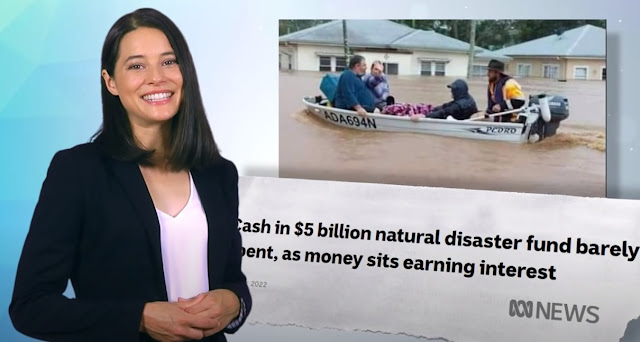
In the 2015 Australian budget $5 billion was put aside for a northern development fund. Prime Minister Tony Abbott called on Business leaders in Queensland's north to develop a plan for a power station that could be considered for funding under this new fund.

The Federal Government would like to see something like a proposal for a 800MW coal fired power station developed in the Galilee basin to provide a ready market and add impetus to the development of one of the proposed coal mines.

Detractors of the fund have labelled it a "Dirty Energy Finance Corporation".

“I’d be very surprised if we did not have, coming forward as a potential project under the Northern Australia fund, a power station,” Mr Abbott said.

“If there were to be a major new power station in North Queensland, if there were to be a more effective distribution network in North Queensland, that would be obviously a very important ­economic breakthrough, because power is one of the basic costs of doing business and basic costs of life. It’s very significant.” said Abbott in an exclusive interview with the Townsville Bulletin.

Of course this works in with Tony Abbott's 'Coal for Prosperity' which ignores the enormous health and climate costs of continued coal mine production.

Monday, January 6, 2014

Australian Heatwave temperatures climb towards 50C at start of 2014

With substantial heat in the continental centre, the first days of 2014 saw temperatures climb towards 50C in western Queensland, western NSW, South Australia and parts of Western Australia and the Northern Territory.

See this video report from the Guardian (3 January 2013) of bushfires on North Stradbroke Island in south east Queensland, and temperatures hitting 54C at Oodnadatta in South Australia.

Related: 2013 hottest year on record for Australia | Sea surface temperatures unusually warm around Australia in 2013

Monday, January 28, 2013

Queensland 2013 bigwet floods, tornados and climate change

Ex-tropical cyclone Oswald has left a trail of damage and destruction from it's origins in the Gulf of Carpentaria to crossing Cape York and working it's way down the Queensland Coast. The storms brought destructive winds, tornados, rough seas, storm surge and torrential rain, followed by flooding. Quite a few rain records were broken for 24 and 48 hour periods in Rockhampton, Gladstone and Bundaberg with some rain gauges recording well over one metre of rain in 48 hours. Now flood level records are being broken for many river basins and towns like Bunderberg and Gympie.


Although the flood levels in Brisbane city may be lower than the devastating floods in 2011, largely due to better management of water storage in the Wivenhoe Dam, in many regional towns and areas these floods are much much worse and are at record levels.

While the Brisbane CBD may be spared flooding damage, many low lying suburbs around Brisbane will feel the force of the muddy dirty water swirling through their yards and houses. And regional towns are faring much worse in these floods than in 2011.

Thousands of people are being displaced, and hundreds are requiring rooftop emergency rescues from rapidly rising floodwaters especially around Bundaberg. Thousands will utilise emergency disaster assistance provided by State and Federal governments.

Asking whether climate change 'caused' these storms and floods is the wrong question. As climatologist Kevin Trenbeth outlines below, all weather events now have a component of climate change in them. It is now a part of our weather system contributing to all extreme weather events.

Saturday, January 26, 2013

Torrential rain, tornados on Queensland coast causing flash flooding and damage

Monday night: Significant flooding events are ocurring at Bundaberg, Gympie, Maryborough, Ipswich, Warwick and in the Lockyer Valley. Rockhampton is expecting significant flood from the Fitzroy river on the weekend. There have been four deaths so far confirmed and two people missing. Nearly 180,000 properties across SE Queensland are still without power Monday night reports Energex. Storm system now bringing torrential rain and flooding to NSW coast, expected to be over Sydney Tuesday dawn and the Illawarra during Tuesday morning before heading out to sea.

In Bundaberg the Burnett River is at 9.2 metres and rising fast, with flow speeds of about 40knots (70km/hr). It is expected to peak at a record level of 9.5 metres late on Tuesday. There was mandatory evacuations carried out today affecting about 5000 people, with over 1500 people from 1000 properties are in evacuation centres. 16 helicopters were brought in, including 4 Black Hawks from the Australian Defence Force to rescue people from house roofs after flood waters rose rapidly today. Patients from Bundaberg hospital are being evacuated to Brisbane.

Sunday 6pm: Rain Likely to continue overnight then subside as the system moves south into NSW. Substantial flooding is occurring in Gladstone, Bundaberg, and Gympie much higher than the 2011 floods. Moderate flooding is expected Monday and Tuesday on the Bremer and Brisbane rivers with up to 3,600 Brisbane properties likely to be impacted, significantly less than the 2011 floods. Brisbane City Council have released flood maps for people to prepare. Flood waters will peak on Monday in Ipswich and Moggill and Tuesday night in Brisbane, where another peak is expected on Wednesday afternoon.

It was reported by Energex at 6.08pm Sunday 27 January that nearly 100,000 customers were without power in south east Queensland. By 7:48pm the number had climbed to 124,845. At 10:18pm 154,497 customers were without power. Just after midnight on Monday 12:28am power was off for 179,835 customers.

Related: Official alert information: QldAlert.com | Emergency QLD media releases | Climate change now affects all weather events

Friday, November 16, 2012

Climate change implications of new study on methane emissions in coal seam gas field


Coal seam gas has been touted as a green transitional fuel, far less polluting than coal, but a new study implies it may not be as green or climate friendly as the industry makes out. It hinges on the level of fugitive emissions produced in development and production of a gas field. A study by two scientists from Southern Cross University based in Lismore, northern NSW, detected much higher levels of the strong greenhouse gas methane around the Tara gas field on the Darling Downs of Queensland west of Brisbane.

Related: The Conversation: Mike Sandiford on A Lot of Hot Air in the Coal to Gas Transition| Renee Santoro on Methane makes shale gas a current climate danger

Action: Getup! have started a Dirtier than Coal? campaign calling on Federal Climate Change Minister Greg Combet to commission urgent research into the climate impacts of coal seam gas, and to make sure that CSG companies start accounting, and paying, for fugitive emissions.

Wednesday, April 13, 2011

Queensland climate becoming more extreme according to coral reef record


The Queensland climate is becoming more extreme with more frequent rain and drought events since the nineteenth century according to research on coral reef cores published in the scientific journal, Paleoceanography by Dr Janice Lough from the Australian Institute of Marine Science in April 2011.

Tuesday, February 1, 2011

Cyclone Yasi spells disaster for flood ravaged Queensland


Tropical Cyclone Yasi may become Queensland's second extreme weather disaster within a month, with the potential to rival the destructive power of Hurricane Katrina that destroyed New Orleans in 2005. Cyclone Yasi is likely to hit the Queensland coast near the regional city of Cairns as a Category 4 storm with winds of 250-260 km per hour and a 4 metre storm surge on late Wednesday or early Thursday.

Thursday, August 5, 2010

Farmers and Conservationists protest coal and CSG expansion in Queensland

Farmers and conservations took to the streets of Brisbane protesting the increasing encroachment and damage to prime agricultural farm land and the environment by the rapacious coal mining and coal seam gas (CSG) industry. While the rally proceeded outside Parliament House, two activists managed to evade security and to unfurl a banner from high up on the Parliament House facade that said "Don't undermine our farms".

Hannah Elvery from Six Degrees told the rally "We want to hand our environment, our farmland intact to future generations." shortly after kids had peddled a toy tractor cavalcade with signs protesting coal mines on farming land.

Tuesday, August 3, 2010

Queensland Conservation organisations urge a vote for the Environment

A broad coalition of conservation organisations in Queensland have released a statement urging a vote for the environment and calling for urgent action to arrest the decline of biodiversity, to tackle dangerous climate change and build a safe and healthy future.

The Queensland conservation coalition set out priorities they want to see implemented by the next Federal Government:


  • A price on carbon to shift investment towards clean energy. The Sunshine State should become a renewable State of Australia

  • A Commonwealth/State Strategic Assessment on the impacts of increasing coal and gas exports on Queensland. The Shen Neng grounding on the reef and significant expansion of port facilities are major threats to the environment and these threats must be addressed

  • The inclusion of groundwater and farmland as matters of national environmental significance under the EPBC Act.

  • A National Sustainable Population Plan based upon ecological constraints to halt over-development and support the transition to low-carbon urban communities


On climate change the statement calls for:


  • Introduce a price on carbon

  • Replace coal generated electricity with solar, wind and other renewable energies

  • Cut greenhouse gas pollution in the next term of Government

  • Phase out fossil fuel industry subsidies and re-direct to renewable energy investments

  • Support poor and vulnerable countries to tackle the impacts of climate change and invest in sustainable development


Their call for urgency reiterates statements from Australia's Chief Scientist, Professor Penny Sackett who said in May 2010 "We are not acting with sufficient speed to reduce the large degree of risk that climate change poses to our health, our environment and our livelihoods."


The statement was prepared by Queensland Conservation Council, Wildlife Preservation Society of Queensland, Cairns and Far North Environment Centre, Mackay Conservation Group, Capricorn Conservation Council, Wide Bay Burnett Conservation Council, Sunshine Coast Environment Council, Toowoomba and Region and Environment Council, Gold Coast and Hinterland Environment Council(GECKO), Logan and Albert Conservation Association, Householders Options to Protect the Environment (HOPE), North Queensland Conservation Council.

You can read the full statement: Queensland Environment Groups Election Platform

Wednesday, July 28, 2010

Coal is hazardous to health: Residents blockade coal trains in north Queensland

Residents of the town of Collinsville, west of Bowen, have just finished a two day blockade of the train line that is used for transporting coal from the Bowen Basin to the Abbot Point coal terminal in North Queensland. The residents are angry about a proposed increase in rail traffic and the adverse health impacts on residents from the increase in vibrations and coal dust emissions, and the problem of delays for emergency vehicles in a town bisected by the rail line.


"This isn't about money - this is about quality of life, health, children," said Whitsunday Councillor Peter Ramage according to this ABC report.

And residents do have much to worry about with coal mining and export expanding under a Government friendly to the coal industry. On Tuesday afternoon an official from QR Rail met with residents and an uneasy peace was negotiated. The Blockade was lifted 8am Wednesday, but residents say it may be imposed again depending on further meaningful action.

Friday, June 4, 2010

Xstrata puts Wandoan coal mine on hold

First the Bickham coal mine was stopped, now Xstrata is placing the Wandoan coal mine project in Queensland - potentially one of the largest coal mines in the world - on hold. Friends of the Earth reckons Xstrata is scapegoating the Rudd Governments super profit resource rent tax for the decision when in reality it is poor planning by Xstrata.


The Anglo-Swiss mining company Xstrata announced today the "loss" of potential jobs at Ernest Henry copper mine in Queensland and in the Wandoan coal project. These jobs are for planned work - they haven't been created and don't yet exist. The announcement was part of the mining industry's campaign against the imposition of a Resource rental tax (RSPT) on all mining.

The Wandoan coal mine was planned to be one of the largest coal mines in the world, estimated by Xstrata to be worth $6 billion dollars. Situated to the west of the Queensland town of Wandoan which is located just off the Leichhardt Highway 407 kilometres north-west of Brisbane, and 382 kilometres south-west of the Port of Gladstone, in the local government area of Dalby Regional Shire.

"The RSPT puts the future of this globally significant AUD6 billion project at risk, together with the development of the Surat Basin as an internationally competitive export coal region," Xstrata Coal Chief Executive Peter Freyberg said.

But Friends of the Earth have claimed the project has been poorly planned based upon high coal export prices.

"We've been watching this project for a number of years and could see that it was not viable without the inflated coal export prices we saw during the boom. Xstrata are using the Government's Resource Profits Tax as a scapegoat to cover up for their own poor planning" said spokes-person for Friends of the Earth Brisbane, Eleanor Smith.

"The Wandoan Coal Project is a climate killer", said Ms Smith "At 30 million tonnes of coal per year, it was to be one of the biggest coal projects in the world and add millions of tonnes to our carbon debt."

Coal mining is a highly destructive activity often destroying rural communities and alienating agricultural productive farming land. "Xstrata have gone into Wandoan and absolutely decimated that community. Landholders have left, leaving schools and local businesses under pressure. A creeping death has taken over the community which was once a vibrant rural hub," said Ms Smith who visited the community as part of a research tour of coal affected communities in 2008.

A report on the Queensland coal industry - Community Dialogues on Coal - released by Friends of the Earth on May 1, 2009 said "The coal industry in Queensland is entering a period of enormous uncertainty and risk, with continuing job losses, shrinking global demand, and massive sector-wide restructures due to climate change policy responses. In all this, it is the people of Queensland's coal communities who will have to deal with the very real impacts of this period of transition."

Friends of the Earth have supported the Rudd Government's proposed Resource Super Profits Tax. "It is high time governments taxed mining companies appropriately," said Eleanor Smith, "The resources belong to us, we bear the environmental and health costs of these industries and yet as it stands the Queensland Government gives all the royalties they earn and then some straight back to the coal industry in infrastructure and other services."

"We're really glad the Federal government is standing up to the mining industry and imposing a super profit tax, it's a shame the Queensland Government won't stand up and support it" said Ms Smith.

Friends of the earth have called for the phasing out of the coal industry due to it's contribution to climate change and destructive environmental and social costs of mining. "We need a tax on mining that funds a just transition of our economy away from fossil fuel energy and dirty jobs to sustainability. As the state with the largest mining industry in Australia we should be doing some major planning for a future without coal mining." said Ms Smith.

"The Xstrata case shows that we cannot trust these companies with our future. We simply must move towards sustainable industries that have been shown to provide more jobs, and decent jobs at that!" concluded Ms Smith.

Court documents and arguments on the Wandoan Coal Mine Case are available at Environmental Law Publishing.


Sources


And just for your entertainment is this video - a song about Xstrata closing a copper smelter plant in Canada earlier this year throwing 670 people out of work. Search on Youtube and you find a lot of nasty stories about Xstrata's attitude to fair employment in local communities.

Friday, April 30, 2010

Diverting attention from addiction to coal

While Kevin Rudd announced a crackdown on tobacco advertising and increased sales tax on cigarettes, attention was diverted from the elephant in the livingroom: climate change and addiction to coal. At the same time Friends of the Earth Australia denounced the development of two new coal export terminals near Bowen in North Queensland, insisting the expansion of Queensland's biggest contributor to climate change must come to an end. Adding an extra $2 sales tax a pack to cigarettes is a diversion from the real problem: Australia's multi-billion dollar addiction to coal. What Kevin Rudd needs to do is put a $35 per tonne carbon levy on coal to send a significant message to business and the public on climate change and public health.

Related: Punishing the people who stand up for the common good | Conservationists and scientists angry at Rudd retreat on climate | Crikey: Pity the coal lobbyists are more powerful than the tobacco lobbyists

Thursday, April 29, 2010

Punishing the people who stand up for the common good

"It's a tragedy that the people who are responsible for the climate catastrophe get rewarded, while the people standing up for the common good get punished." said Greenpeace activist Kristen McDonald after leaving a Mackay courtroom this week. She was one of fifteen Greenpeace activists convicted and fined on charges of Unregulated High Risk Activity and other charges during a three day occupation in August 2009 of the Abbot and Hay Point coal terminals near Bowen, Queensland.

The majority had no conviction recorded, and fines ranged from $300 to $750. According to Greenpeace, the judge acknowledged that the activists' views were genuinely held, but said he was 'miffed' that the activists tried to highlight the issue, because 'the public is already well aware of the issue' and that our views are 'held by the majority of the community'.

Outside the court Greenpeace Australia Pacific's CEO Linda Selvey told reporters that the future of Queensland and the environment is being sacrificed for the short term profits of the coal industry and that the public concern on climate has not been translated into strong leadership by Governments on this issue. "While we continue to expand our coal industry in Australia and continue to increase our carbon dioxide emissions, Greenpeace will continue to take action," she said.

The charges against the Esperanza captain, Vladimir Votiacov, will be heard in Mackay Magistrate's Court in May 2010, for failing to comply with Harbour Master's direction, for navigating a ship in a pilotage area without a pilot and operation of a ship which endangers safety. The piloting of the Esperanza into the coal loader area effectively blocked all access by waiting bulk carriers.

The three day coal blockade occurred at Abbot Point and Hay Point coal loaders, near Bowen, Queensland from 4th to 6th August 2009 and involved the Greenpeace ship MV Esperanza. Hay Point is one of the world's largest coal export terminals. About 30 per cent of export coal originates from Australia.

"I can see more than 12 coal ships waiting to load coal behind me. There are mountains of coal. It is a bit overwhelming - tonnes and tonnes of it. Eveything I see here means to me that there's one more family that will be affected, one more child that won't have the future they deserve." said Fenton, a Fijian activist speaking while locked onto the Hay Point coal loader.

It is estimated the three day blockade may have cost BHP Billiton Mitsubishi Alliance who own and operate the coal port up to $20million in lost productivity, and a loss of about $1.5 million in revenue in the form of coal royalties to the Queensland Government.

See photos of the action from August 2009 on Greenpeace Australia Pacific Blog.

Images Copyright Greenpeace

Saturday, April 17, 2010

On Coal Company Fines, Reef shortcuts and Environmental Justice in Queensland

This week we saw hefty fines of $70,000 handed out to three foreign sailors from a bulk coal carrier, the MV Mimosa, which was caught travelling through restricted waters of the Great Barrier Reef off north Queensland. Also in the news was the arrest and charging of the master and the chief officer on watch of the Shen Neng 1, which ran aground on the Douglas shoal causing damage in a restricted area of the Great Barrier Reef Marine Park. But almost under the radar were the token fines totalling $8,000 handed out to three Fitzroy Coal Mines in Queensland for polluting the Fitzroy river.

The three central Queensland mines were fined for discharging into the Fitzroy River in breach of their environmental licence conditions. Moranbah North coal mine has been fined $4,000 for exceeding its water release limits and for releasing water from an unauthorised discharge point. Rolleston and Callide coal mines were each fined $2,000 for exceeding their water release limits. "These fines are a clear message to mine operators that breaches will not be tolerated," said Kate Jones, Queensland Minister for Climate Change and Sustainability.

But Friends of the Earth said the fines were much too light. "This is a token gesture and it will neither silence the critics of this dirty industry, nor deter the mining companies from continuing to illegally pollute the Fitzroy river every time there is a flood," said Friends of the Earth spokesperson Bradley Smith.

In the last financial year, both Callide and Moranbah mines each produced over $1 billion dollars of coal at average export prices, while Rolleston's coal production was $980 million.

Kate Jones said that the fines are a clear message to mine operators that breaches will not be tolerated. A further six mines had been issued with warning notices - Blackwater, Moorvale, Dawson Central, Blair Athol, Peak Downs and Moranbah North. "Eleven mines have been, or are being, investigated for non-compliance with Environmental Authority conditions." said Kate Jones. "The decision not to prosecute was taken because in each instance, despite the breach of environmental operating conditions, the investigations found no evidence of significant environmental harm having been caused," she said.

Enforcement action for breaches of licence conditions can range from a warning notice to a fine of up to $200,000 and two years imprisonment, depending on the severity of water quality breaches. According to Mr Smith the $2000 fines handed down equate to 1.5% of the revenue made by each of these mines in just one hour.

So on the one hand we have 3 foreign sailors from a bulk carrier, the MV Mimosa, being fined $70,000 each for the risks of damaging the sensitive marine ecosystem involved in taking a shortcut through restricted zones of the Great Barrier Reef Marine Park. On the other hand we have 3 token fines amounting to $8,000 and warnngs issued to coal mining companies for breaching licence conditions and polluting the Fitzroy River and other waterways. The ship taking a shortcut put the reef at risk, but caused no damage. The Discharge from the coal mines polluted the Fitzroy river, but probably with minimal environmental damage. The sailors get fined a total of $210,000, the mining companies just $8,000. So where is the comparative justice?

There seems to be a gross lack of environmental justice in the token fines handed out for pollution by coal mining companies in comparison to the fines against ship masters and officers for equally risky and sometimes damaging behaviour as exemplified by the damage caused by the Shen Neng 1 damaging the reef.

Coal is a major export earner for the Queensland Government. Queensland is the largest coal exporting state in the largest coal exporting country in the world, accounting for as much as 20% of the global trade, with mining and infrastructure projects set to double coal exports. According to the Friends of the Earth the 2009-2010 Queensland Budget has allocated $1,758 million to coal subsidies and expansions.

The Queensland environment Minister Kate Jones talks tough in her media release, but the pitifully small fines are another example of the greenwash and bias towards the coal industry at the expense of the environment and climate. Read more on how the Queensland Climate Change Minister spins Climate Destruction of Great Barrier Reef.

"The planned doubling of the coal industry will inevitably lead to more pollution of our waterways and more accidents on the Great Barrier reef," said Mr Smith. "Everyday Queenslanders enjoy fishing in the Fitzroy and visiting the Great Barrier Reef. It is unfortunate that the Government more interested in getting a quick buck from expanding the coal industry than protecting these natural assets for all Queenslanders to enjoy," said Mr Smith from Friends of the Earth.

Sources:


Takver is a citizen journalist from Melbourne who has been writing on Climate Change issues and protests including Rising Sea Level, Ocean acidification, Environmental and social Impacts since 2004.

Monday, February 8, 2010

Waratah Coal Galilee mine in Queensland set to become World's largest Coal Mine

Friends of the Earth in Brisbane, Australia have described the proposed Waratah Coal Galilee mine, set to become the world's largest coal mine, as another nail into the coffin of our climate. Waratah Coal's Clive Palmer and Queensland Premier Anna Bligh jointly announced on February 7, 2010 a multi-billion dollar deal which would see a twenty year supply of coal to Chinese power-stations, and a substantial expansion of coal exports.

"This deal drives another nail into the coffin of our climate. If the project goes ahead, then emissions from the exported coal would equal 20% of Australia's total domestic emissions," said Friends of the Earth spokesperson Bradley Smith on the Galilee mine being declared a 'significant project' .

"This makes a mockery of claims made by Premier Bligh that the Queensland Government is serious about tackling climate change," Mr Smith said.

"The 8000 Ha Bimblebox Nature Refuge near Alpha would be cleared and mined by this project. How ironic that in the International Year of Biodiversity, Queensland still lacks legislation to protect areas of high conservation significance from mining," commented Mr Smith, echoing similar calls from the Mackay Conservation Group.

Bimblebox was purchased in 2000 with the savings of a number of concerned individuals, as well as funding from the Australian National Reserve System program. In 2003, the Bimblebox Nature Refuge Agreement (category VI IUCN protected area) was signed with the Queensland state government to permanently protect the conservation values of the property. Nature Refuges and the protected areas that make up the National Reserve System are not automatically protected from mineral exploration and mining, which in Australia are granted right of way over almost all other land uses.

The Bimblebox Nature Refuge website describes "We are faced with the absurd irony, that in 2009 with all that we know about Australia's biodiversity crisis and the threat of climate change, that a protected area rich in biodiversity and with carbon stores intact could be sacrificed for the sake of producing more climate changing coal."

"This case reveals a stunning contradiction in Australian government priorities and policies, which aim to conserve biodiversity on protected areas, but yet which affords no protection for these areas if minerals are found beneath the soil." says the Bimblebox Nature Refuge website.

"We want to know why the Queensland Government continues to put coal mining first when it is destroying our biodiversity and our climate," Mr Smith said.

The open cut coal mine, projected to be the world's largest, is on the traditional land of the Darumbal indigenous people.

The project involves construction of a railway line 490km to the Port of Abbot Point, where a new coal terminal will be built, and construction of a dam within the Belyando River catchment and a water pipeline from the Burdekin Dam. Waratah Coal website advises the project's estimated total development cost is AU$7.5 Billion.

Queensland is the largest coal exporting state in the largest coal exporting country in the world, accounting for as much as 20% of the global trade, with mining and infrastructure projects set to double coal exports.

Further Information


Sources