Mastodon Climate Citizen Mastodon
Showing posts with label guest. Show all posts

Friday, December 6, 2024

Guest Post: Trusted partner to the Pacific, or giant fossil fuel exporter? This week, Australia chose the latter

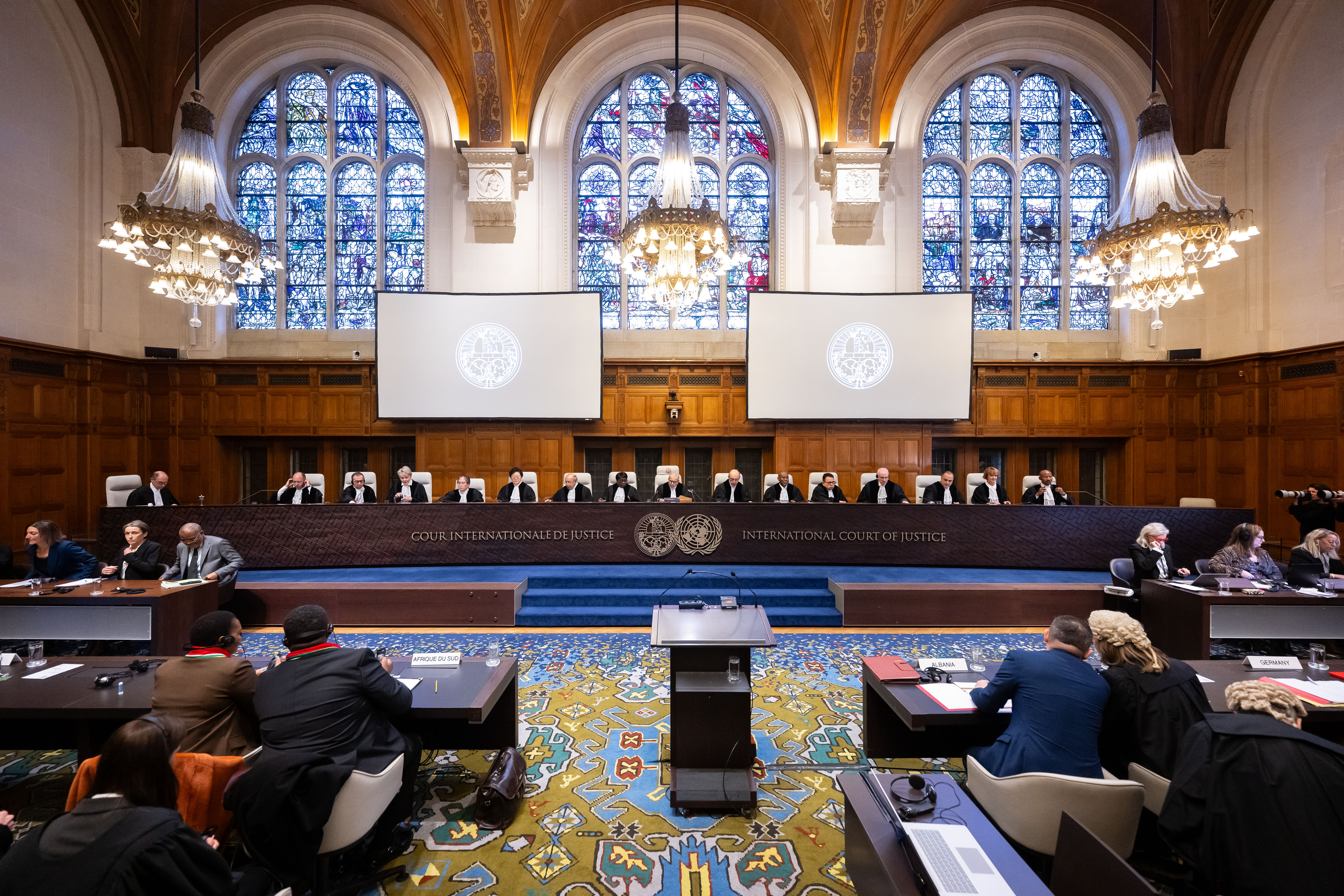
The International Court of Justice International Court of Justice , CC BY-NC-ND
Wesley Morgan, UNSW Sydney and Liam Moore, James Cook University

Australia has long tried to be two things at once – a trusted friend to Pacific nations in a bid to reduce China’s influence, and a giant exporter of fossil fuels. This diplomatic tightrope has become increasingly hard to walk, as Pacific nations see climate change as an existential threat.

This week, Australia’s government was forced to make a choice in a very public forum. It chose fossil fuels.

Disappointed by the slow pace of United Nations climate talks, Vanuatu and other Pacific nations launched a case at the International Court of Justice in the Netherlands to clarify the obligations countries have to prevent harm to the Earth’s climate system for current and future generations.

While international climate negotiations are often conducted behind closed doors, this case is being broadcast in public. We can clearly see the arguments Australia has laid out and the countries it has aligned itself with.

In the courtroom on Monday, Australia sided with major emitters and fossil fuel exporters such as Saudi Arabia, the United States and China to try and minimise their legal liability in contributing to climate change.

Tuesday, November 26, 2024

Guest Post: After nearly 10 years of debate, COP29’s carbon trading deal is seriously flawed


Kate Dooley, The University of Melbourne

Negotiators at the COP29 climate conference in Baku have struck a landmark agreement on rules governing the global trade of carbon credits, bringing to a close almost a decade of debate over the controversial scheme.

The deal paves the way for a system in which countries or companies buy credits for removing or avoiding greenhouse gas emissions elsewhere in the world, then count the reductions as part of their own climate efforts.

Some have argued the agreement provides crucial certainty to countries and companies trying to reach net-zero through carbon trading, and will harness billions of dollars for environmental projects.

However, the rules contain several serious flaws that years of debate have failed to fix. It means the system may essentially give countries and companies permissions to keep polluting.

Thursday, May 30, 2024

Guest Post: Prof Bill Hare on Sleight of hand: Australia’s Net Zero target is being lost in accounting tricks, offsets and more gas

Bill Hare, Murdoch University

In announcing Australia’s support for fossil gas all the way to 2050 and beyond, Prime Minister Anthony Albanese has pushed his government’s commitment to net zero even further out of reach.

When we published our analysis in December on Climate Action Tracker, a global assessment of government climate action, we warned Australia was unlikely to achieve its net zero target, and rated its efforts as “poor.”

That’s because Australia’s long-term emissions reduction plan – released under the Morrison Coalition government and not yet revised by the Albanese Labor government – resorts to unrealistic technological fixes and emissions offsets.


Thursday, November 9, 2023

Guest Post: 26 years ago, Howard chose fossil fuels over the Pacific. What will Albanese choose? Wesley Morgan explains

Aitutaki island lagoon and sea and island
One issue, two prime ministers on the same island, 26 years apart. Shutterstock

Wesley Morgan, Griffith University

Hot on the heels of trips to Washington and Beijing, Prime Minister Anthony Albanese is now in the Cook Islands for the Pacific Island Forum. There, he will aim to strengthen relations with Pacific countries and reaffirm Australia’s place as a security partner of choice.

But to do that, he’ll have to repair a historic split from when former prime minister John Howard met with Pacific leaders on the same island, Aitutaki, a quarter of a century ago to defend his choice to expand Australia’s fossil fuel industries.

Pacific leaders see climate change as by far their greatest security threat. Sea level rise, stronger cyclones, marine heatwaves and ocean acidification pose existential threats. They will ask Albanese to support a regional declaration for a phaseout of fossil fuels.

What will happen on the atoll? We could see history repeat – Pacific outrage, Australian intransigence. Or we could see a better outcome, if Albanese signals Australia is at last ready to move away from fossil fuels.

Monday, November 21, 2022

Guest Post: COP27: one big breakthrough but ultimately an inadequate response to the climate crisis

Photo by IISD/ENB


Matt McDonald, The University of Queensland

For 30 years, developing nations have fought to establish an international fund to pay for the “loss and damage” they suffer as a result of climate change. As the COP27 climate summit in Egypt wrapped up over the weekend, they finally succeeded.

While it’s a historic moment, the agreement of loss and damage financing left many details yet to be sorted out. What’s more, many critics have lamented the overall outcome of COP27, saying it falls well short of a sufficient response to the climate crisis. As Alok Sharma, president of COP26 in Glasgow, noted:

Friends, I said in Glasgow that the pulse of 1.5 degrees was weak. Unfortunately it remains on life support.

But annual conferences aren’t the only way to pursue meaningful action on climate change. Mobilisation from activists, market forces and other sources of momentum mean hope isn’t lost.

Friday, November 11, 2022

Guest Post: Global carbon emissions at record levels with no signs of shrinking, new data shows. Humanity has a monumental task ahead


Marcin Jozwiak/Unsplash, CC BY
Pep Canadell, CSIRO; Corinne Le Quéré, University of East Anglia; Glen Peters, Center for International Climate and Environment Research - Oslo; Judith Hauck, Universität Bremen; Julia Pongratz, Ludwig Maximilian University of Munich; Philippe Ciais, Commissariat à l’énergie atomique et aux énergies alternatives (CEA); Pierre Friedlingstein, University of Exeter; Robbie Andrew, Center for International Climate and Environment Research - Oslo, and Rob Jackson, Stanford University

Global carbon dioxide emissions from all human activities remain at record highs in 2022, and fossil fuel emissions have risen above pre-pandemic levels, according to a new analysis by an international body of scientists.

The analysis, by the Global Carbon Project, calculates Earth’s “carbon budget”, which is how much CO₂ humans have released, and how much has been removed from the atmosphere by the oceans and land ecosystems. From there, we calculate how much carbon can still be emitted into the atmosphere before Earth exceeds the crucial 1.5℃ global warming threshold.

This year, the world is projected to emit 40.6 billion tonnes of CO₂ from all human activities, leaving 380 billion tonnes of CO₂ as the remaining carbon budget. This amount of emissions is disastrous for the climate – at current levels, there is a 50% chance the planet will reach the 1.5℃ global average temperature rise in just nine years.

Wednesday, November 9, 2022

Guest Post: After decades putting the brakes on global action, does Australia deserve to host UN climate talks with Pacific nations?

Shutterstock
Wesley Morgan, Griffith University

As the COP27 climate talks got underway in Egypt this week, climate and energy minister Chris Bowen announced Australia would bid to co-host the annual United Nations climate summit with Pacific island nations in 2026.

Playing host to the world’s climate negotiations could be a very big deal. It would be the largest diplomatic event Australia has ever held and would have major implications for both climate policy and our international relations.

A successful summit would signal Australia’s shift from fossil fuel heavyweight to renewables superpower and herald a new era of regional cooperation with the Pacific. However, these outcomes cannot be assumed, nor can support from Pacific nations.

Monday, September 26, 2022

Guest Post: Australia violated the rights of Torres Strait Islanders by failing to act on climate change, the UN says. Here’s what that means

Shutterstock
Guest post by Kristen Lyons, The University of Queensland via the Conversation.

In a landmark decision, a United Nations committee on Friday found Australia’s former Coalition government violated the human rights of Torres Strait Islanders by failing to adequately respond to the climate crisis.

The Torres Strait Islanders ‘Group of Eight’ claimed Australia failed to take measures such as reducing greenhouse gas emissions and upgrading seawalls on the islands. The UN upheld the complaint and said the claimants should be compensated.

This decision is a breakthrough in Indigenous rights and climate justice, including by opening up new pathways for Indigenous communities – who are often on the frontline of the climate crisis – to defend their rights.

Sunday, March 6, 2022

Guest Post: Like rivers in the sky: the weather system bringing floods to Queensland will become more likely under climate change

Kimberley Reid, The University of Melbourne and Andrew King, The University of Melbourne

The severe floods in southeast Queensland this week have forced hundreds of residents to flee the town of Gympie and have cut off major roads, after intense rain battered the state for several days. The rain is expected to continue today, and travel south into New South Wales.

We research a weather system called “atmospheric rivers”, which is causing this inundation. Indeed, atmospheric rivers triggered many of the world’s floods in 2021, including the devastating floods across eastern Australia in March which killed two people and saw 24,000 evacuate.

Our recently published research was the first to quantify the impacts these weather systems have in Australia, and another study we published in November looked closely at the floods in March last year

We found while atmospheric rivers bring much-needed rainfall to the agriculturally significant Murray-Darling Basin, their potential to bring devastating floods will become more likely in a warmer world under climate change.

Tuesday, November 9, 2021

Guest Post: Shipping emissions must fall by a third by 2030 and reach zero before 2050 – new research

The shipping sector is in urgent need of decarbonisation. pxhere.com
Simon Bullock, University of Manchester; Alice Larkin, University of Manchester, and James Mason, University of Manchester

International shipping is a crucial part of the global economy – 90% of the world’s trade is transported by sea. But almost all ships use fossil fuels, and so the sector is also a major emitter of greenhouse gas pollution – with emissions roughly on a level with the entire nation of Germany.

Progress on cutting emissions in shipping has been slow. In fact, emissions are no lower now than they were ten years ago. The sector’s record is under scrutiny at COP26 – the latest UN climate summit in Glasgow. The International Maritime Organization (IMO) – the UN body charged with delivering international shipping’s strategy on tackling climate change – has a target to cut emissions by 50% by 2050. The UN Secretary General Antonio Guterres criticised this, arguing the IMO’s pledges are not aligned with the Paris Agreement’s goal of limiting global heating to 1.5°C, but are “more consistent with warming above 3°C”.

See also: To reach net zero, we must decarbonise shipping. But two big problems are getting in the way

Thursday, November 4, 2021

Guest Post: Global emissions almost back to pre-pandemic levels after unprecedented drop in 2020, new analysis shows

Shuttestock
Pep Canadell, CSIRO; Corinne Le Quéré, University of East Anglia; Glen Peters, Center for International Climate and Environment Research - Oslo; Pierre Friedlingstein, University of Exeter; Robbie Andrew, Center for International Climate and Environment Research - Oslo, and Rob Jackson, Stanford University

Global carbon dioxide emissions have bounced back after COVID-19 restrictions and are likely to reach close to pre-pandemic levels this year, our analysis released today has found.

The troubling finding comes as world leaders meet at the COP26 climate talks in Glasgow in a last-ditch bid to keep dangerous global warming at bay. The analysis was undertaken by the Global Carbon Project, a consortium of scientists from around the world who produce, collect and analyse global greenhouse gas information.

The fast recovery in CO₂ emissions, following last year’s sharp drop, should come as no surprise. The world’s strong economic rebound has created a surge in demand for energy, and the global energy system is still heavily dependent on fossil fuels.

Most concerning is the long-term upward trends of CO₂ emissions from oil and gas, and this year’s growth in coal emissions, which together are far from trending towards net-zero by 2050.

Guest Post: global deforestation deal at COP26 will fail if countries like Australia don’t lift their game on land clearing

Shutterstock
Kate Dooley, The University of Melbourne

At the Glasgow COP26 climate talks overnight, Australia and 123 other countries signed an agreement promising to end deforestation by 2030.

The declaration’s signatories, which include global deforestation hotspots such as Brazil, Indonesia and the Democratic Republic of the Congo, have committed to:

working collectively to halt and reverse forest loss and land degradation by 2030 while delivering sustainable development and promoting an inclusive rural transformation.

This declaration should be welcomed for recognising how crucial forest loss and land degradation are to addressing climate change, biodiversity decline and sustainable development.

But there have been many such declarations before, and it’s hard to feel excited about yet another one.

What really matters is changing policy domestically; if countries don’t change what they are doing at home to bring emissions from fossil fuels to zero and restore degraded lands, declarations like this are meaningless.

Saturday, October 30, 2021

Guest video: Fact-checking & Debunking Morrison's Net Zero 2050 'Plan' | Good COP Bad COP


The Australia Institute:

So Scott Morrison and Angus Taylor announced a net zero emissions by 2050 plan that projects that things will go wonderfully and that they won't need to change anything, especially not phasing out fossil fuel! How good.

However, their supposed confidence in beating their very weak 2030 target isn't enough to actually legislate any changes or increased commitments. This one is a real bin fire, and to help us along, and in honour of COP26 beginning in Glasgow very soon, we're drinking Scotland's finest scotch. Join us as we unpack loads of spin, mistruths and discuss what Australia should actually be taking to COP. (Hint: support and protection of the fossil fuel industry doesn't make the cut)

Friday, April 17, 2020

Guest Post: The smoke from autumn burn-offs could make coronavirus symptoms worse.

I felt somewhat vindicated when this post appeared at The Conversation warning of hazard reduction burns smoke during the early pandemic. Correlation links had already been found between covid19 severity, increased mortality and higher levels of pollution.

See: Pandemic ponderings: Indications that High levels of Air Pollution exacerbate Covid19 spread (virus may be airborne) (March 26, 2020) and Pandemic Ponderings: US study finds Air pollution link to Covid19 deaths (April 8, 2020)

The smoke from autumn burn-offs could make coronavirus symptoms worse. It’s not worth the risk

MomentsForZen/Flickr, CC BY-NC-ND
Don Driscoll, Deakin University; Brian Oliver, University of Technology Sydney; Courtney Alice Waugh, Nord University; Marcel Klaassen, Deakin University, and Veerle L. B. Jaspers, Norwegian University of Science and Technology

Tuesday, November 27, 2018

Guest Post: Frank Jotzo on Labor's new energy policy using the #NEG and the need to do so much more


Labor's policy can smooth the energy transition, but much more will be needed to tackle emissions

Frank Jotzo, Crawford School of Public Policy, Australian National University

The Labor party’s energy policy platform, released last week, is politically clever and would likely be effective. It includes plans to underwrite renewable energy and storage, and other elements that would help the energy transition along. Its approach to the transition away from coal-fired power is likely to need more work, and it will need to be accompanied by good policy in other sectors of the economy where greenhouse emissions are still climbing.

The politics is quite simple for Labor: support the transition to renewable electricity which is already underway and which a large majority of Australians support, and minimise the risk that its proposed policy instruments will come under effective attack in the lead-up to the 2019 election.

Saturday, January 27, 2018

Guest Post: What's your heatwave plan?

Australia's 'deadliest natural hazard': what's your heatwave plan?


Andrew Gissing, Macquarie University and Lucinda Coates, Macquarie University

Heatwaves are Australia’s deadliest natural hazard, but a recent survey has found that many vulnerable people do not have plans to cope with extreme heat.

Working with the Bushfire and Natural Hazards Cooperative Research Centre and the Bureau of Meteorology, my colleagues and I surveyed 250 residents and 60 business managers in Western Sydney and the NSW North Coast.

We found that 45% of those at risk – including the elderly, ill and very young – did not proactively respond to heatwave warnings as they did not think it necessary or did not know what to do.


Read more:
Cities need more than air conditioning to get through heat waves


Few at-risk people reported moving to cooler locations, and more than 20% of people in Western Sydney were concerned about the impacts of energy prices on their ability to use air-conditioning. For most people, extreme heat left them feeling hot and uncomfortable or unable to sleep, though around 15% felt unwell. Few people reported checking on vulnerable family members, friends or family during heatwaves.

Businesses also suffered disruption, and most companies with employees working on machinery or outdoors reported lower than normal productivity.

Many people said that they didn’t need to take any further actions to adjust to future extreme temperatures. However, for some extreme heat is already impacting their living preferences, with around 10% of people indicating that they are considering moving to a cooler town or suburb.


Read more:
Are heatwaves 'worsening' and have 'hot days' doubled in Australia in the last 50 years?


A history of deadly heatwaves

Australia has a long history of deadly heatwaves. The table below shows numbers of deaths and death rates per 100,000 population from episodes of extreme heat in Australia by decade, reaching back to 1844. The information comes from PerilAUS, a database that records the impact of natural hazards reaching back to the early days of Australia’s European settlement

The death rate is the number of deaths per head of population in the country at that time, and was consistently, significantly higher between 1890 and 1939 than for any period before or since.


An extraordinary heatwave occurred between October 1895 to January 1896 that impacted nearly the entire continent but especially the interior. PerilAUS records 435 deaths, 89% of them within New South Wales. Deaths also occurred in South Australia, Western Australia, Victoria and Queensland. Bourke, in NSW, lost 1.6% of its population to the heat: temperatures of 40℃ in the shade were already being recorded in October, mid-spring.

During the disastrous 1939 Black Friday bushfires, 71 people died in Victoria. But at least 420 people died in the heatwaves which preceded the fires, largely in New South Wales. The heatwaves were accompanied by strong northerly winds and followed a very dry six months, increasing the severity of the subsequent fires.

Most will remember the catastrophic bushfires that destroyed several towns in Victoria in 2009 but not many will remember that these fires also followed two heatwave events across Victoria and South Australia, where at least 432 people died.

In 2009, new records of three consecutive days over 43℃ in Melbourne and eight over 40℃ in Adelaide were set. A feature of these heatwaves was the very hot minimum temperatures, with Melbourne’s temperature falling to between 20-25℃ overnight and Adelaide to just 30℃.

We must all plan ahead

There is no reason why a deadly heatwave could not strike Australia again this summer, and there’s at least some evidence that the frequency of heatwaves in Australia is increasing. Sudden peaks in air-conditioning use also creates the risk of overloading electricity grids and prompting blackouts, so it’s important to think about how you can stay cool without power.

Some easy ways to stay safe include tuning into heatwave and emergency warnings by listening to radio broadcasts or searching emergency websites.

Simple measures, like rescheduling outdoor activities to cooler parts of the day, closing curtains and blinds and staying indoors are always sensible. Research suggests that elderly people may be particularly reluctant to use air conditioners, but if your household contains vulnerable people it’s important to use every cooling option available.

It may be possible for some people to use an app or timer to turn on their air conditioners during the afternoon to cool their house, then turn it off after 6pm to avoid contributing to peak demand.


Read more:
High energy costs make vulnerable households reluctant to use air conditioning: study


If you have friends or family who are elderly, sick or very young, make sure to check in on them. Consider selecting a cooler place, like a shopping centre or library, you can visit during peak temperatures.

Make a plan for pets and animals, particularly those who will be left outside during the day while the household is at work or school. Ensure they have shade and access to plenty of water.

On a larger scale, better urban planning and house design – and even planting shade trees near houses – are needed. Unfortunately, deadly heatwaves are part of Australia’s summer, and it’s likely they will worsen under climate change. Planning ahead can literally be a life saver.

Andrew Gissing, Adjunct Fellow, Macquarie University and Lucinda Coates, Risk Scientist, Risk Frontiers Natural Hazards Research Centre, Macquarie University

This article was originally published on The Conversation. Read the original article.

Friday, January 13, 2017

Guest Post: Arguments for abandoning Commercial Flight in Australia


Life in a post-flying Australia, and why it might actually be ok


Martin Young, Southern Cross University; Francis Markham, Australian National University; James Higham, University of Otago, and John Jenkins, Southern Cross University

In Australia, the amount of aviation fuel consumed per head of population has more than doubled since the 1980s. We now use, on average, 2.2 barrels (or 347 litres) of jet fuel per person per year.

Saturday, September 10, 2016

Guest post: Pacific pariah: how Australia’s love of coal has left it out in the diplomatic cold


Tony De Brum with Coalition of High Ambition at Paris COP21. The Marshall Islands helped to galvanise what became an inexorable push towards a 1.5-degree target in Paris
Photo: John Englart, CC BY-SA


Wesley Morgan, The University of the South Pacific

Australia’s Prime Minister Malcolm Turnbull will have some explaining to do when he attends the Pacific Islands Forum leaders' meeting in Pohnpei, Micronesia, this week.

Australia’s continued determination to dig up coal, while refusing to dig deep to tackle climate change, has put it increasingly at odds with world opinion. Nowhere is this more evident than when Australian politicians meet with their Pacific island counterparts.

It is widely acknowledged that Pacific island states are at the front line of climate change. It is perhaps less well known that, for a quarter of a century, Australia has attempted to undermine their demands in climate negotiations at the United Nations.

Thursday, June 2, 2016

Guest Post: As India cuts aerosol air pollution, extreme temperatures may spike making heat health adaptation plans crucial


An insightful article into India's situation with regards to the air pollution problem and extreme heatwave temperatures. This year temperatures spiked to 51C in north western India: Wet Bulb Near 35 C — Heatwave Mass Casualties Strike India Amidst Never-Before-Seen High Temperatures.

The researchers argue that aerosols from air pollution are likely to have a substantial cooling impact at the moment, even as India experiences record temperatures. With roll out of renewables and the push to electrify vehicle transport, air pollution will likely be reduced increasing health outcomes. But it may be at the expense of a spike in temperatures at this time of year which will have a large heat health impact on the population, especially poorer people who cannot afford technological adaptation measures such as air-conditioning. It is another reason why recently implemented adaptation plans in India for heat health are so important, as well as taking effective and rapid emissions reduction on a global level in accordance with the UNFCCC Paris Agreement.

What is going on with India's weather?

Sarah Perkins-Kirkpatrick, UNSW Australia; Andrew King, University of Melbourne, and Geert Jan van Oldenborgh

Wednesday, April 27, 2016

Guest Post: John Hewson - Shorten can wedge Turnbull on climate


I recently wrote how I still feel ashamed of Australia during and after the Paris COP21. Australia signed the Paris Agreement in New York on April 22, but is still not showing signs of walking the talk on climate action. I am far from the only one who are critical of current Government political inaction in addressing climate change from across the political spectrum. Here is John Hewson, an Economics Professor and a former opposition leader of the Liberal National Party in 1993, who accused the Government, and Environment Minister Greg Hunt, of 'blatant hypocrisy'...

John Hewson, Australian National University

It was all a bit much for me to see Environment Minister Greg Hunt wallowing in the signing of the Paris Agreement on emissions reduction in New York this week. His commitment to its ratification by year end, after opposing the pricing of carbon and attempting to close down the renewables industry, is nothing short of blatant hypocrisy.

Further, it was galling to hear him boast that, “We’re now on track to meet and beat our..targets and our Paris 2030 targets are strong and ambitious and they have been welcomed and hailed”, and then to attempt to create the impression that “our domestic climate change policies” have and will continue to deliver “real outcomes”.