Mastodon Climate Citizen --> Mastodon
Showing posts with label carbon budget. Show all posts

Tuesday, July 2, 2024

Guest Post: Australia’s ‘carbon budget’ may blow out by 40% under the Coalition’s nuclear energy plan – and that’s the best case


Sven Teske, University of Technology Sydney

The Coalition’s pledge to build seven nuclear reactors, if elected, would represent a huge shift in energy policy for Australia. It also poses serious questions about whether this nation can meet its international climate obligations.

If Australia is to honour the Paris Agreement to limit global average temperature rise to 1.5˚C by mid-century, it can emit about 3 billion tonnes, or gigatonnes, of carbon dioxide (CO₂) over the next 25 years. This remaining allowance is what’s known as our “carbon budget”.

My colleagues and I recently outlined the technological options for Australia to remain within its carbon budget. We did this using a tool we developed over many years, the “One Earth Climate Model”. It’s a detailed study of pathways for various countries to meet the 1.5˚C goal.

So what happens if we feed the Coalition’s nuclear strategy into the model? As I outline below, even if the reactors are built, the negative impact on Australia’s carbon emissions would be huge. Over the next decade, the renewables transition would stall and coal and gas emissions would rise – possibly leading to a 40% blowout in Australia’s carbon budget.

Friday, November 11, 2022

Guest Post: Global carbon emissions at record levels with no signs of shrinking, new data shows. Humanity has a monumental task ahead


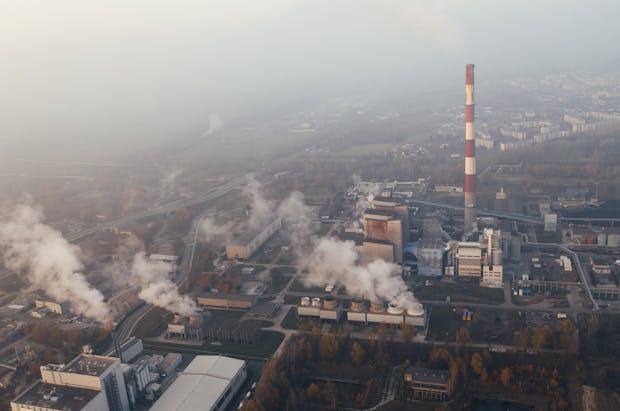
Marcin Jozwiak/Unsplash, CC BY
Pep Canadell, CSIRO; Corinne Le Quéré, University of East Anglia; Glen Peters, Center for International Climate and Environment Research - Oslo; Judith Hauck, Universität Bremen; Julia Pongratz, Ludwig Maximilian University of Munich; Philippe Ciais, Commissariat à l’énergie atomique et aux énergies alternatives (CEA); Pierre Friedlingstein, University of Exeter; Robbie Andrew, Center for International Climate and Environment Research - Oslo, and Rob Jackson, Stanford University

Global carbon dioxide emissions from all human activities remain at record highs in 2022, and fossil fuel emissions have risen above pre-pandemic levels, according to a new analysis by an international body of scientists.

The analysis, by the Global Carbon Project, calculates Earth’s “carbon budget”, which is how much CO₂ humans have released, and how much has been removed from the atmosphere by the oceans and land ecosystems. From there, we calculate how much carbon can still be emitted into the atmosphere before Earth exceeds the crucial 1.5℃ global warming threshold.

This year, the world is projected to emit 40.6 billion tonnes of CO₂ from all human activities, leaving 380 billion tonnes of CO₂ as the remaining carbon budget. This amount of emissions is disastrous for the climate – at current levels, there is a 50% chance the planet will reach the 1.5℃ global average temperature rise in just nine years.

Thursday, December 6, 2018

Guest Post: Carbon emissions will reach 37 billion tonnes in 2018, a record high


Pep Canadell, CSIRO; Corinne Le Quéré, University of East Anglia; Glen Peters, Center for International Climate and Environment Research - Oslo; Robbie Andrew, Center for International Climate and Environment Research - Oslo, and Rob Jackson, Stanford University

Carbon dioxide (CO₂) emissions from fossil fuels and industry are projected to rise more than 2% (range 1.8% to 3.7%) in 2018, taking global fossil CO₂ emissions to a new record high of 37.1 billion tonnes.

The strong growth is the second consecutive year of increasing emissions since the 2014-16 period when emissions stabilised, further slowing progress towards the goals of the Paris Agreement that require a peak in greenhouse gas emissions as soon as possible. Strong growth in emissions from the use of coal, oil and natural gas suggests CO₂ emissions are likely to increase further in 2019.

Wednesday, February 24, 2016

Global carbon budget reassessed downwards, but do we really have a safe carbon budget?


UNEP emissions Gap report from November 2015. Figures are in GTCO2e

The latest study identifies we have less time and carbon budget to act on climate change than previously thought. To aspire to meet the 1.5C target, as agreed to in the UNFCCC Paris Agreement or even the well below 2 degree C target, we are going to need to make substantial emission reductions this decade and continue with that trend.

Research on carbon budgets by Joeri Rogelj et al (2016) - Differences between carbon budget estimates unravelled (abstract) published in Nature Climate Change, warns that the global carbon budget has been over-estimated.

Tuesday, January 20, 2015

95 percent of Australian coal, 88 percent of Global Fossil Fuel reserves need to remain unburned - Implications for Queensland


A new study published in Nature argues that 80 per cent of global fossil fuel reserves needs to remain un-burned if we are to limit global warming temperature rise to 2 °C throughout the twenty-first century. This has implications for new coal developments in Queensland including the Galilee basin coal mines being proposed and the recently approved (19 December 2014) Acland Phase 3 coal mine on the Darling Downs.

The commitment to limit climate change to this level was made by heads of state at the Copenhagen climate talks in 2009, one of the few positive agreements to come out of those talks.

Lead author Dr Christophe McGlade, Research Associate at the UCL Institute for Sustainable Resources said: “We’ve now got tangible figures of the quantities and locations of fossil fuels that should remain unused in trying to keep within the 2°C temperature limit. Policy makers must realise that their instincts to completely use the fossil fuels within their countries are wholly incompatible with their commitments to the 2°C goal. If they go ahead with developing their own resources, they must be asked which reserves elsewhere should remain unburnt in order for the carbon budget not to be exceeded.”

The table above shows how much reserves from each region need to stay in the ground. The authors include two sets of figures: one where Carbon capture and storage commercial technology is developed by 2025 for widespread implementation, and one without carbon capture and storage. I have highlighted the OECD Pacific region.

I think the painfully slow development of CCS shows that it is an uneconomic technology that will be made irrelevant by the advances in solar panel efficiencies and rollout of wind power. But that also limits the amount of fossil fuels we can burn and still meet the 2 degree target.

Without CCS being implemented, Australia must keep 95 per cent of coal reserves in the ground, unexploited, un-burned. That means the proposed coal mines planned for Queensland's Galilee basin need to remain undeveloped no matter the economics of the projects.

Monday, September 22, 2014

Australian Government in denial on proposals for climate action at UN Climate summit


The reason the Peoples Climate protest occurred is that there is a UN summit on climate change on 23 September called by UN Secretary General Ban Ki-moon to motivate more ambitious targets to be brought to the negotiating table. About 120 heads of state are attending, but not Australia's Prime Minister Tony Abbott who claims he needs to stay in Canberra an extra day, even though he is scheduled to be in New York for the UN General Assembly debate on the threat of terrorism the following day. What a lame excuse! In his place Australia's Foreign Affairs Minister Julie Bishop is being sent.

Ms Bishop will be attending the climate summit as a "leaner" not a "lifter". Countries have been urged to bring along ambitious plans for emissions cuts to take the plans for an agreement in Paris forward, but Ms Bishop told the Sydney Morning Herald that Australia would only confirm a 5 per cent emissions cut on 2000 levels by 2020 and that it was "too early" for plans for deeper emissions cuts beyond Australia's existing policies. At a meeting in New York of the top 17 economies hosted by United States Secretary of State John Kerry, Bishop called this an "ambituous target".

What world are they living in?

Friday, September 19, 2014

PwC report: World still on track for dangerous warming this century


The latest Pricewaterhousecoopers (PwC) Low Carbon Economy Index (LCEI) shows that the world is still on track for 3.7 to 4.8°C of warming by the end of the century, rather than the 2 degrees limit committed to at Copenhagen in 2009 and at subsequent climate talks. But there are small glimers of climate hope from the continued growth in renewables and in the reduction in carbon intensity reported by some countries. Australia in particular was a surprise showing a 7.2 per cent reduction in carbon intensity in 2013, more than any other major nation.

However, even if all current policies on the table were fully implemented at their highest ambition range, the planet would still be on a trajectory of at least 3 degrees warming by the end of the century.

Sunday, October 6, 2013

IPCC: Climate change is unequivocal with rapid and substantive emissions reduction required

The original of this article was published on the Climate Action Moreland website.


A packed hall last thursday night (3 October) in Melbourne heard from Australian climate scientists on the latest science report from the Intergovernmental Panel on Climate Change (IPCC). I was one of four members of Climate Action Moreland who attended.

The Australian Meteorological and Oceanographic Society (AMOS) organised the free public event in Melbourne to explore the findings and significance of the latest comprehensive report on the science of climate change. It was so popular that 700 people registered to attend - the capacity of the hall, and a further 200 people enquiring had to be turned away or put on a waiting list.