Mastodon Climate Citizen --> Mastodon
Showing posts with label forests. Show all posts

Thursday, October 26, 2023

Global Forests action failing says report with increase in deforestation in 2022 putting at risk 2030 Forests target

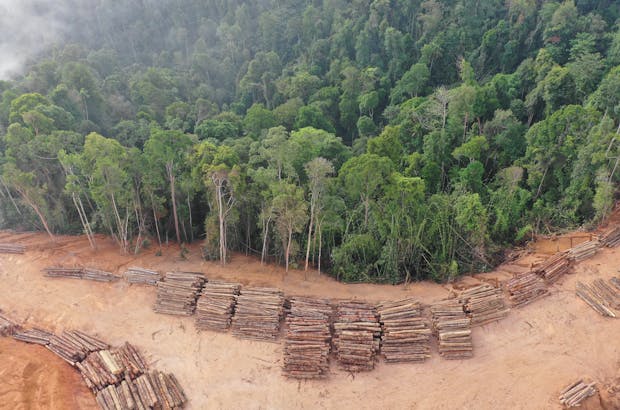
In 2022, global gross deforestation reached 6.6 million hectares worldwide and was 21 percent higher than needed to eliminate deforestation by 2030 says a new report..

The loss of primary tropical forests reached 4.1 million hectares and is even further off track—the loss was 33 percent higher than the needed trajectory to halt primary forest loss by the end of the decade.

This backslide puts forest goals even farther out of reach after the small but insufficient progress made in 2021.

Nothing less than a radical transformation of development pathways, finance flows, and governance effectiveness and enforcement is required to shift the world’s trajectory to achieve the 2030 forest goals advises the report.


Tuesday, May 23, 2023

Logging Native Forests in Victoria to end by 1 January 2024, saving 14 million tonnes of carbon by 2030


Cudos to Premier Dan Andrews and the State Labor Government who took the giant step of announcing the end to native forest logging in Victoria by 1st January 2024. The State Government announced an extra $200 million in funding for transition of affected workers and communities in the 2023/24 budget.

In October 2022 the Victorian Forest Alliance and The Tree Projects published a report which found that an immediate end to native forest logging could prevent 14 million tonnes of carbon emission by 2030. 

 Key facts from the report:

  • Native forest logging in Victoria emitted around 3 million tonnes of carbon in 2021.
  • Emissions from native forest logging are equivalent to the annual emissions of 700,000 cars.
  • Regrowing forests on average only ever hold up to 50% of the carbon of the original forests before they are logged again.
  • Close to 90% of Australia’s wood now comes from Australian plantations.
  • Logging plantations produces 60% less carbon dioxide emissions than the logging of native forests.
Transition is always difficult process, but it can bring new opportunities in Land management and conservation of the forests, and for recreational and tourist opportunities. It also helps guarantee the purity of Melbourne's water supply. It opens up roles for indigenous knowledge in land management, conservation and for managing bushfire threat.

We are likely to see the creation of a Great Forests National Park that many conservationists and scientists have called to be established.

Friday, November 12, 2021

Methane, coal transition, transport and forest pledges at COP26 still leave substantial emissions gap - Climate Action Tracker


I'd like to say the various pledges made these last two weeks have eliminated the emissions gap, but they haven't. If they are implemented and garner more signatories they will shrink the gap. New analysis by Climate Action Tracker shows that for the countries that have signed the pledges, they have closed the 2030 emissions gap between a 1.5°C path and government targets by around 9% - or 2.2 GtCO2e.

The UN Environment Program Emissions Gap report published late October showed that the planet heading to 2.7C climate catastrophe without needed 2030 ambition at COP26

"Even with all new pledges and such sectoral initiatives for 2030, global emissions are still
expected to be almost twice as high in 2030 as necessary to for a 1.5°C compatible pathway.
Therefore, all governments need to reconsider their targets towards COP27 in 2022 to jointly
enhance mitigation ambition." says Climate Action Tracker.

The final decision of the conference is presently being worked through. There is a draft clause which  give nations that have not submitted “new or updated” 2030 targets another 12 months to “revisit and strengthen” their emissions reduction effort in their Nationally Determined contributions. 

Thursday, November 4, 2021

Guest Post: global deforestation deal at COP26 will fail if countries like Australia don’t lift their game on land clearing

Shutterstock
Kate Dooley, The University of Melbourne

At the Glasgow COP26 climate talks overnight, Australia and 123 other countries signed an agreement promising to end deforestation by 2030.

The declaration’s signatories, which include global deforestation hotspots such as Brazil, Indonesia and the Democratic Republic of the Congo, have committed to:

working collectively to halt and reverse forest loss and land degradation by 2030 while delivering sustainable development and promoting an inclusive rural transformation.

This declaration should be welcomed for recognising how crucial forest loss and land degradation are to addressing climate change, biodiversity decline and sustainable development.

But there have been many such declarations before, and it’s hard to feel excited about yet another one.

What really matters is changing policy domestically; if countries don’t change what they are doing at home to bring emissions from fossil fuels to zero and restore degraded lands, declarations like this are meaningless.

Wednesday, November 3, 2021

Over 100 leaders commit to end deforestation by 2030 with Glasgow Leaders’ Declaration on Forest and Land Use

Leader's event: Action on Forests and Land-use. Leaders’ Declaration on Forest and Land Use


Over 100 global leaders pledged to halt and reverse deforestation and land degradation by 2030, underpinned by $12bn in public and $7.2bn in private funding. to invest in protecting and restoring forests and reversing land degradation.

Leaders representing over 85% of the world’s forests made the commitment to halt and reverse deforestation and land degradation by 2030 at COP26. This included $12bn in public and $7.2bn in private funding. These announcements were part of an unprecedented package of economic and political commitments to end deforestation worldwide.

It includes the northern forests of Canada and Russia to the tropical rainforests of Brazil, Colombia, Indonesia and the Democratic Republic of the Congo. Australia has signed the Leaders Declaration on Forest and Land Use, but has not committed to the Global Forest Finance Pledge

Tuesday, August 31, 2021

Australia's deception about its LULUCF forestry


Australia makes use of Land Use, Land Use change and Forestry (LULUCF) credits as part of its national emissions profile while most countries do not include this area of emissions. We have done this since the 1997 Kyoto Protocol Agreement when we threatened to wreck the agreement if these emissions weren't included. Subsequently a clause to allow counting of these emissions was included, and it was colloquially known as the Australia clause.


Australia has long used this clause based on land use emissions in the past to allow a target for Australia  to actually grow our emissions, while nearly all other nations had targets to reduce their emissions.

So Australia has cruised along without doing much work in any other sector in decarbonisation, based upon historical reduction in Land Use, Land Use Change and Forestry emissions.

Pretty shonky and hardly fair.

A recent remote sensing study has highlighted even further the shonky nature of carbon accounting in LULUCF emissions. The study is called 'Annual Maps of Forests in Australia from Analyses of Microwave and Optical Images with FAO Forest Definition', published 23 August.

Wednesday, February 8, 2017

Great Forest National Park and Port Philip Bay: communicating conservation research at #vicbiocon17


Sarah Rees and Sheree Maris gave two inspiring presentations on science communication in conservation and biodiversity in an afternoon plenary at the Victorian Biodiversity Conference in Melbourne.

Its always nice to discover new natural wonders in our local area. It enhances our sense of place and pride in nature, and is an important motivation for conservation.

Sarah Rees and Sheree Maris bring us the wonders of the ancient Central Highland forests and the extraordinary ecosystems hiding just under the surface of Port Philip. Both of these environments are just on the edge of Melbourne, yet are largely unknown and unexplored by most Melburnians.

Wednesday, February 25, 2015

Impact of climate change science on Regional Forest Agreement stumps bureacrat


This article was originally published at Nofibs.com.au

At Senate estimate hearings on Monday Senator Janet Rice, the Greens spokesperson for forests, asked a number of probing questions on Regional Forest Agreements. One question in particular asked about how climate change science was included in the review of these agreements. The bureaucrats looked like stunned mullets, until one volunteered that the question would have to be taken on notice.

Really? They haven't considered some sort of cost benefit analysis of carbon sequestration? Not even as an opportunity to bid under the Emmissions Reduction Fund for the carbon sequestration potential involved in protection of old growth forests?

Senator RICE: I have one more question on climate, particularly on how climate science has progressed significantly in the years since the first RFAs were struck and climate has not been considered in the reviews so far. I want to know how it is intended that the impacts of climate change and the value of forests for carbon sequestration are going to be taken into account in the review and progress reports to come.

Mr McNamara: We will have to take the question on notice.

Thursday, March 19, 2009

UN report: Forests rapidly vanishing

World Forests are disappearing rapidly according to the 2009 State of the World's Forests report by the UN Food and Agricultural Organisation (FAO). The report notes that expansion of large-scale monocultures of oil palm, soy and other crops for agrofuel production has been a key factor in the failure to halt deforestation.

2009 State of the World’s Forests report | FOEI | Global Forest Coalition

Two leading environmental organisations, Friends of the Earth International and the Global Forest Coalition, have called on world governments to take immediate action to halt deforestation and forest degradation.

The report has also been criticised by these organisations on biofuels, illegal logging, and massive replacement of forests by large-scale tree plantations in many countries.

"Plantations are not forests", said Isaac Rojas, coordinator of the Forest and Biodiversity Program of Friends of the Earth International. "All over the world, plantations destroy the lands and livelihoods of local communities and Indigenous Peoples, as well as biodiversity and water resources. They also store far less carbon than natural forests."

"As they provide very little employment for rural people, tree plantations are also a major cause of rural depopulation and a further shifting agricultural frontier, thus causing the destruction of forests elsewhere," said Simone Lovera, managing coordinator of the Global Forest Coalition.

"By actively promoting monoculture tree plantations, FAO itself is partly responsible for this global trend of replacing biologically diverse forests with straight rows of usually non-native trees," she added.

The report says that the current economic crisis has affected forests in a number of ways:

"The collapse of the housing sector has reduced the demand for a wide array of wood and wood products, leading to mill closures and unemployment. New investments are slowing as a result, affecting all wood industries."

"The demand for environmental services has also changed as a result of reduced ability and willingness to pay for such services. Carbon prices have remained highly volatile. Future climate change arrangements may face challenges as countries give priority to tackling the economic crisis."

"Potential negative impacts on forest resources could include reduced investment in sustainable forest management and a rise in illegal logging as the decline in the formal economic sector opens opportunities for expansion of the informal sector. Land dependence, which had been easing, could increase, raising the risk of agricultural expansion into forests, deforestation and reversal of previous forest gains. However, there could also be positive impacts – reduced wood demand could lessen pressure on forests, while conversion of forest for large-scale cultivation of commercial crops such as oil-palm, soybeans and rubber could slow as their prices fall."


Corrupted by corporate funding and lobbying in political process

I agree that some businesses are making money out of climate change, through financial derivatives and dodgy carbon offset programs. This is an issue to do with greed and lack of regulation of markets by Government.

Climate change is not the scam, rather it is the political process that has allowed business to run rampant over civil society, to make a few people rich at the expense of the many. And we have allowed our politicians to be corrupted by this process through corporate funding and lobbying in the political process.

Just take a look at the Amazon that has suffered two extreme "1 in 100 year" drought events in the space of five years. If drought events continue, the era of intact Amazon forests buffering the increase in atmospheric carbon dioxide may have passed,” a team led by Simon Lewis of Leeds University in the UK writes in a Feb 2011 issue of Science.

http://blogs.nature.com/news/2011/02/record_droughts_raise_alarm_ov.html