Mastodon Climate Citizen --> Mastodon
Showing posts with label solution. Show all posts

Sunday, May 14, 2023

Guest Post: Despairing about climate change? These 4 charts on the unstoppable growth of solar may change your mind

Shutterstock

Andrew Blakers, Australian National University

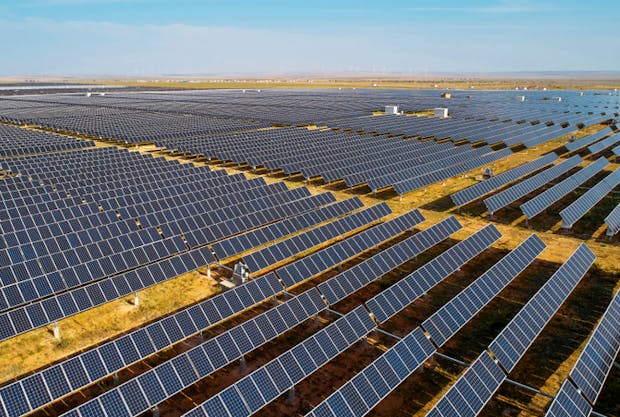
Last year, the world built more new solar capacity than every other power source combined.

Solar is now growing much faster than any other energy technology in history. How fast? Fast enough to completely displace fossil fuels from the entire global economy before 2050.

The rise and rise of cheap solar is our best hope for rapidly mitigating climate change.

Total solar capacity tipped over 1 terawatt (1,000 gigawatts) for the first time last year. The sector is growing at around 20% a year. If this continues, we’ll hit 6 terawatts around 2031. In capacity terms, that would be larger than the combined total of coal, gas, nuclear and hydro.

Monday, December 19, 2016

Installing #Solarhotwater makes both financial and climate sense


I came home from attending #COP22 in Marrakech only to have my gas-boosted hot water system die a week or so later. A good opportunity to upgrade to an electric boosted solar hot water service to increase household energy efficiency and reduce emissions, although lousy timing for my Christmas finances.

Friday, February 28, 2014

Harnessing the wind to fight the storms of climate change

How Offshore wind turbines can win a david and goliath battle with hurricanes. Here is a lateral idea: build large offshore wind farms that provide electricity from day to day, but also substantially decrease damaging hurricane or tropical cyclone wind speed and storm surge.

With tropical cyclones forecast to grow stronger and more intense with climate change, if not in greater frequency, such an idea has definite merit to explore. Climate change is predicted to escalate Tropical Cyclone / hurricane damage costs particularly for US and China.

We wouldn't need to put offshore wind farms right along the coast, perhaps just where they can be most effective at lessening storm damage to human lives and infrastructure. And allow us to plant mangroves and cultivate coastal wetlands to store carbon, and provide fish nursery habitat, and absorb storm surges, rather than hugely expensive rock and concrete sea walls.

Friday, March 29, 2013

Biofuel from atmospheric CO2 via a 'Rushing Fireball'

Making a more efficient biofuel may be part of the solution to tackling climate change. Biofuels are essentially carbon neutral, first capturing carbon dioxide through the plant photosynthesis process which is then released when the fuel is burnt. But processing the plant biomass sugars to a fuel that can be used is an inefficient process that can perhaps be improved upon.

Michael Adams, a Professor in Biochemistry and Molecular Biology from the University of Georgia, is researching micro organisms that live near deep ocean volcanic vents, in particular Pyrococcus furiosus, or "rushing fireball," This little single celled anaerobic critter feeds on carbohydrates in the super-heated ocean waters near geothermal vents at temperatures around 100C. It has proven adept at carrying out many basic chemical processes with it's enzymes stable at the high temperatures of it's environment.

Pyrococcus furiosus is a member of the hyperthermophilic Archaea family of creatures and was only discovered relatively recently by Karl Stetter in 1986 in deep sea vents and volcanic marine mud off the coast of Italy.

Wednesday, February 6, 2013

CO2 carbon capture process mimics Sea Urchin

Carbon capture and storage (CCS) is a thorny and costly problem which scientists are still coming to terms with for a technological solution to mitigating carbon pollution and climate change. But what if we mimiced nature, as indeed scientists at Newcastle University in the UK have done in understanding how the simple sea urchin, a thorny little marine creature, uses nickel to turn carbon dioxide in the sea to calcium carbonate for making their exo-skeleton.

This is another demonstration of the importance of preserving biodiversity: for the insights it can give us in understanding the world around us and assisting in breakthroughs in biological, chemical and pharmaceutical processes. Unfortunately for the sea urchin warming oceans reduce sea urchin sperm longevity impacting the fertilisation process which may lead to sea urchin population decline in the future.

Capturing carbon and long term sequestration is a costly industrial process that currently uses substantial energy and resources. Carbon sequestration is presently only working in pilot programs. Usually CO2 is captured and pumped underground under pressure in depleted oil and gas fields. But there is also a risk of leakage that would substantially lessen any carbon reduction gains made. Earthquakes causing fractures and leakage are also a concern. While there are many pilot CCS plants in operation round the world, industrial scale CCS plants are still a coal mining company's dream.

Several alternate methods for carbon capture and storage (CCS) are being researched and have been proposed as possible answers. See Scientific breakthrough: Remove CO2 from pollution and atmosphere for alternate fuel (Jan 2012) and Award for ground breaking research in capturing Carbon Dioxide (Aug 2010). For a discussion on Carbon Capture and Storage and seismicity see Carbon capture and storage and the Melbourne Earthquake (June 2012)

So a method of extracting waste carbon from coal fired power stations and chemical plants and converting it to a stable mineral form like Calcium or Magnesium Carbonate seems like a no brainer. Especially if it can be done cheaply and efficiently at commercial industrial scale.

Sunday, March 11, 2012

Paul Gilding at TED: Choosing life over fear - The coming war for a sustainable civilisation


This talk by sustainability campaigner Paul Gilding is both pessimistic and optimistic about the future of human civilisation facing numerous planetary crises including human overpopulation, overuse of resources, anthropogenic climate change, and biodiversity loss. The earth is now full. Human civilisation is facing a great disruption this century, within our lifetimes.

Economic growth as we know it is dead, the planet can no longer sustain infinite growth, without degradation of our working capital, the earth and it's resources. We are now spending the future of our children.

Paul stresses that where we have a great crisis, humans have the capability to act with great resourcefulness. We have an opportunity for change. We can make the preparations in transitioning our lives, our communities through the great disruption.

Saturday, January 7, 2012

Scientific breakthrough: Remove CO2 from pollution and atmosphere for alternate fuel

An improved method of removing carbon dioxide (CO2) cheaply from industrial smoketacks and even scrubbing the air has been discovered which may help in stabilising climate and reducing carbon emissions. Resolving the huge problem of climate change and global warming is going to take significant action on many levels. This new technology, if it can be rapidly developed and commercialised, may prove extremely useful in reducing carbon emissions and ultimately helping our society to become carbon negative. But the scientists have gone a further step and propose turning the captured carbon dioxide into an alternate stable fuel called renewable methanol to assist in resolving the peak oil petroleum resource depletion problem.