Mastodon Climate Citizen --> Mastodon

Monday, November 20, 2023

Global Plastics Treaty INC3 in Nairobi starts from a Zero Draft, ends with Petro States blocking and delaying progress


The United Nations  Intergovernmental Negotiationg Committee for a Global Plastics Treaty is meeting in Nairobi, Kenya from 13-19 November 2023. Global Plastics pollution is an escalating Crisis that interlinks with the Biodiversity Crisis and Climate Crisis. The process for a Global Plastics Treaty was started in March 2022 at the resumed fifth session of the UN Environment Assembly (UNEA-5.2).

A Zero Draft of the treaty has been prepared with elements of both common rules for all parties, and a nationally driven policy framework, and many procedural issues still to sort out.

UNEP third session INC3 website } CIEL preparatory work | Break Free From Plastic | IPEN

Australia is a member of the High Ambition Coalition to End Plastics Pollution

19 November - Day 7 

INC3 concludes with no intersessional work approved, petro states blocking consensus, negotiating in what some call in bad faith. New revised zero draft authorised to be prepared by the Secretariat by 31 December 2023 for INC4 in Ottawa in April 2024

Plenary suspended and delegates
continued deliberations in informal groups.

Photo: by IISD/ENB | Anastasia Rodopoulou
Read IISD/ENB report on Sunday negotiations

Magnus Løvold (@magnuslovold) from Norwegian Academy of International Law, tweeted:

The third round of the #PlasticsTreaty #INC3 negotiations just concluded in Nairobi with no plan for how to move the process forward. This is a deeply disappointing, but not unexpected, outcome. For too long, ambitious countries have failed to face up to the reality that a meaningful treaty on plastic pollution cannot be achieved as long as the least ambitious countries are allowed to control the pace of the process.

The Nairobi round will go down in history as an unqualified failure of multilateral environmental diplomacy. It did nothing but record in elaborate detail the magnitude of the committee’s disunity. The week’s proceedings have swept away all doubt that some of the countries involved in this process — notably Iran   Saudi Arabia  and Russia — are negotiating in bad faith. It is impossible to develop a treaty on plastic pollution under such circumstances.

As they prepare for the next negotiation round in Ottawa, @HACplastic  and other ambitious countries must muster the courage to move ahead, even if those least willing to join stay behind. 

We cannot afford to let a small minority of countries continue to hold this process hostage. It is time to overrule their spoiler tactics, and take future substantive decisions to a vote #ConsensusKillsDemocracy

Centre for International Environmental Law: Ambition Meets Inertia in Third Session of Global Plastic Treaty Talks. Argues that Absent a Major Course Correction, Ottawa will host a “Polite but Massive Failure.”

“This week made clear that an overwhelming majority of countries demand an ambitious treaty that covers the full lifecycle of plastics,” said CIEL President Carroll Muffett. “That treaty is still achievable in these talks, but only if negotiators acknowledge and confront the coordinated campaign by fossil fuel and petrochemical exporters to prevent real progress of any kind.”

Alongside exporting countries themselves, INC-3 saw a massive presence in the industries that make plastics and plastic feedstocks. A CIEL analysis revealed that 143 fossil fuel and chemical industry lobbyists registered for the negotiations – including on country delegations.

“The results this week are no accident,” said David Azoulay, Program Director for Environmental Health at CIEL. “Progress on plastics will be impossible if Member States do not confront and address the fundamental reality of industry influence in this process.” 

There was also criticism of the High Ambition Coalition in the CIEL statement. Australia is a member of the High Ambition Coalition.

a troubling number of wealthier countries, including members of the 60+ member “High Ambition Coalition to End Plastic Pollution,” suggested a willingness to prioritize short-term consensus over long-term success.

“‘High Ambition’ is not a brand — it’s a commitment,” Azoulay said. “High Ambition countries in the Global North must follow the lead of Rwanda, Uruguay, and Pacific Island states in fighting to ensure ambition is reflected not just in empty political commitments but in the final treaty text.”

Break Free From Plastic (@brkfreeplastic) tweeted:

The #INC3 missed a vital chance for ambitious action on plastic reduction. A few loud voices held sway, blocking advances in setting targets, baselines & schedules.

We need a strong #ConflictofInterest policy to overcome deliberate obstruction.

In a statement they called for a strong conflict of interest policy and reassess how to deal with the countries deliberately blocking the ambition of the negotiation process. 

Despite a mandate for a revised draft, Member States failed to reach an agreement on priorities for intersessional work ahead of INC-4, despite an 11th-hour attempt, jeopardizing significant advancements for the treaty process. 

With the petrochemical influence in the treaty negotiations, including the ‘low ambition’ of a group of ‘like-minded’ plastic-producing countries, and the lack of ambition by the so-called ‘high ambition’ countries, the INC-3 concluded without concrete headway towards the mandate adopted at the fifth United Nations Environment Assembly (UNEA 5.2) to negotiate a comprehensive and legally binding treaty that will cover measures along the entire life cycle of plastic.

Greenpeace Canada responded: UN INC3 ends in frustration as governments allow low ambition countries to derail Global Plastics Treaty

“This round of Global Plastics Treaty talks proves once again the toxic influence the petrochemical industry has on global governments and our future. Between now and the next round of negotiations, high ambition countries have their work cut out for them to counter the damage done by the problematic low ambition countries. Unless the Treaty dramatically reduces plastic production, we cannot make gains on the worsening climate, pollution and biodiversity crises and their associated harms to people worldwide.

“The Global Plastics Treaty must reduce plastic production by at least 75% by 2040 to stay within the 1.5 degree threshold."

GAIA statement - Plastics Treaty Negotiations held Hostage by small handful of Oil Producing Countries -  excerpt:

At the start of INC-3 the Zero Draft was a balanced document representing a range of views to provide Member States a basis for negotiating; by Sunday afternoon the draft more than tripled in size. A minority of Member States–particularly oil-producing nations in the newly formed informal “group of like-minded countries” including Iran, the Russian Federation, and Saudi Arabia– undermined the previously agreed upon mandate for a plastics treaty, seeking to include low-ambition language and trying to run out the clock. 

Such interventions include inserting language on “national priorities,” “national circumstances,” and a “bottom-up approach,” which could lead to voluntary measures overpowering legally-binding measures – a thus far failed approach to international environmental policy, as evidenced by the Paris Climate Agreement. 

The same Member States, and some others, worked hard to undermine the mandate for a treaty covering the “full lifecycle of plastic, including its production, design, and disposal” (Res. 5/14), to focus solely on waste management approaches, claiming that the problem is not plastic itself, but its disposal. 

“There is no difference between plastic and plastic pollution– plastic is pollution,” says Rafael Eudes, Aliança Reziduo Cero, Brazil. Plastic pollutes from the moment fossil fuels are extracted from the earth, to when the waste is thrown away.”

Friday, November 17, 2023

State of Climate Action Report 2023 finds World behind on almost every policy required to cut carbon emissions


This is a major science based assessment of global efforts for climate action to reduce emissions. It found that Coal must be phased out seven times faster, Deforestation must be reduced four times faster, public transport around the world built out six times faster than at present, to avoid the worst impacts of climate breakdown. Altogether it found that 41 of 42 indicators assessed were not on track to achieve their 2030 targets. 

Progress for more than half of these indicators remains well off track, such that recent efforts must accelerate at least twofold this decade. Worse still, another six indicators are heading in the wrong direction entirely.

Tuesday, November 14, 2023

Sea Dumping bill: Fossil Fuel grand coalition of Labor, Liberal & Nationals pass carbon capture and storage, throwing a lifeline to Fossil Gas expansion

On Monday 13 November a grand coalition of fossil fuel supporting parties: Labor Liberals and Nationals, voted to pass the Sea Dumping Bill without amendment. This is a loophole in the Safeguard Mechanism allowing the Fossil Fuel companies to open up new Fossil Gas projects and putting Australia’s 2030 emissions reduction targets in jeopardy.

Labor has pushed this bill through - Environment Protection (Sea Dumping) Amendment (Using New Technologies to Fight Climate Change) Bill 2023 - rather than enhance the Water Trigger in the existing Environment Protection and Biodiversity Conservation Act (an election promise), or to add a climate trigger to that Act. Anthony Albanese even proposed a Climate Trigger amendment bill in 2005.

Monday, November 13, 2023

Inger Andersen, opening remarks at INC-3: Plastics Treaty needs to be based on a comprehensive approach that addresses the full life cycle of plastic


Inger Andersen speech at the opening plenary of the 3rd conference meeting of the  Intergovernmental Negotiating Committee to Negotiate a Global Plastics Treaty sets out the broad arguments and need for the Global Plastics Treaty. Inger Andersen is  Under-Secretary-General of the United Nations and Executive Director of the United Nations Environment Programme (UNEP)

Follow progress of INC3 at the main article: Global Plastics Treaty in Nairobi starts from a Zero Draft - INC3 

Sunday, November 12, 2023

Production Gap 2023 Report: Australia's disconnect on net zero emissions while expanding fossil fuel production

The United Nations Environment Program (UNEP) released the Global Production Gap Report on 8 November 2023. Governments in aggregate are planning to produce more than double the amount of fossil fuels in 2030 than would be consistent with limiting warming to 1.5°C. This includes Australia.

The assessment for Australia highlighted that Ministers had rejected calls to ban new fossil fuel projects, that some 69 coal projects and 49 new oil and gas projects are in the pipeline which represent nearly 5 GtCO2eq of potential emissions. Fossil fuel production is a major source of Australia’s domestic emissions, accounting for 19% of the total in 2021.

The Federal Labor Government has approved 10 new or extended coal or gas projects since coming to power in May 2022.

At the launch UN Secretary General Antonio Guterres called it "a startling indictment of runaway climate carelessness." 

Earth's hottest 12 month period with most of the temperature increase due to burning fossil fuels

Analysis by climate scientists at Climate Central has highlighted we have just gone through the hottest 12 month period in recorded history (November 2022-October 2023), with an average global  temperature of 1.3C above pre-industrial temperatures.

The Copernicus Climate Change Service (C3S) also reported that 2023 is on track to become the warmest year after record October. They report that October 2023 was 1.7°C above the average for 1850-1900, designated as the pre-industrial reference period. October marked the fifth consecutive month of record temperatures globally.

"October 2023 has seen exceptional temperature anomalies, following on from four months of global temperature records being obliterated. We can say with near certainty that 2023 will be the warmest year on record, and is currently 1.43°C above the preindustrial average. The sense of urgency for ambitious climate action going into COP28 has never been higher," said Samantha Burgess, C3S’ Deputy Director.

Friday, November 10, 2023

Australia - Tuvalu sign resettlement treaty over existential rising seas climate threat: Australia –Tuvalu Falepili Union

Australia –Tuvalu Falepili Union
Australian Prime Minister Anthony Albanese has signed an agreement with the Tuvalu PM, Kausea Natano, to set up “a union” between the two countries.

The arrangement will offer a special visa that offers safe residency to the people of Tuvalu so they can work, live and study in Australia because of the impacts of climate change.

The agreement was made at the Pacific Islands Forum in the Cook Islands. It will see 280 people per year given a "special mobility pathway" to "live, work and study" in Australia. Tuvalu is a low lying Pacific nation with about 11,000 people.

In return, Australia will have effective veto power over Tuvalu's security arrangements with any other country.

The Australia-Tuvalu Falepili Union comprises a bilateral treaty between Tuvalu and Australia, as well as a commitment articulated in a joint leaders' statement (see below) to uplift broader bilateral partnership.

"Falepili" is a Tuvaluan word for the traditional values of good neighbourliness, care and mutual respect.

The Treaty comes as the Queensland government approved new fossil fuel projects: incentivised a new frontier in gas exploration program in the Bowen and Galilee Basin and granted a coal mine extension. Since the Federal Labor Government has come to power it has approved 10 new or extended coal and gas projects, and committed $1.5 billion for the Darwin Middlearm petrochemical hub that will include an LNG plant for export of Beetaloo fracked Gas.

Queensland announces cash grants for new gas exploration, new coal mine extension, to ramp up ocean warming destruction of Great Barrier Reef

Cash grants for gas exploration in Queensland announced by the Queensland Labor Government, Treasurer and Minister for Trade and Investment Cameron Dick, and Minister for Resources Scott Stewart.

"$21 million in funding is available through the Frontier Gas grants program for companies looking to explore and unlock new reserves in the Bowen and Galilee basins and bring Queensland gas to market sooner." said the media statement.

At the same time the Queensland Government granted a mining lease for Anglo American to expand its Lake Lindsay coal mine operation near Middlemount in the Bowen Basin. It will extend the life of the mine producing 5.6 million tonnes of coal and affects 500 jobs. But the loss of tens of thousands of Tourism and hospitality jobs oon the Great Barrier Reef? They are going.

New fossil fuel projects are at odds with climate science for meeting the Paris Climate Temperature Targets. The Queensland Government incentivising fossil fuel exploration and granting extended mining leases is adding to global warming that is cooking the planet, and warming oceans destroying the Great Barrier Reef. It is destroying long term jobs and biodiverrsity.

Guest Post: The unsafe Safeguard Mechanism: how carbon credits could blow up Australia’s main climate policy


James Adams/Unsplash
Andrew Macintosh, Australian National University and Don Butler, Australian National University

This article is part of a series by The Conversation, Getting to Zero, examining Australia’s energy transition.

A time bomb is ticking inside the Albanese government’s climate policy. When it explodes, Australia will fall short of its climate targets and leave a gaggle of investors shirtless.

The problem arises from a poorly understood aspect of the net zero transition: carbon credits or offsets.

The centrepiece of Australia’s climate policy is a carbon pricing scheme known as the Safeguard Mechanism. It places caps on the emissions of around 220 of the country’s largest mining, gas and industrial facilities, based on the emissions intensity of their operations. Every year through to 2030 these caps will decline by between 1% and nearly 5%.

The facilities have two ways to keep their emissions within the caps. They can reduce them, or they can buy and surrender one of two forms of credits, the most significant being Australian carbon credit units (ACCUs) issued under Australia’s carbon offset scheme.

Thursday, November 9, 2023

Guest Post: 26 years ago, Howard chose fossil fuels over the Pacific. What will Albanese choose? Wesley Morgan explains

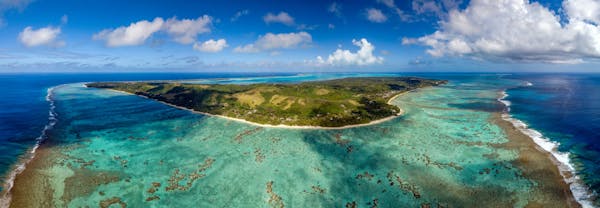
Aitutaki island lagoon and sea and island
One issue, two prime ministers on the same island, 26 years apart. Shutterstock

Wesley Morgan, Griffith University

Hot on the heels of trips to Washington and Beijing, Prime Minister Anthony Albanese is now in the Cook Islands for the Pacific Island Forum. There, he will aim to strengthen relations with Pacific countries and reaffirm Australia’s place as a security partner of choice.

But to do that, he’ll have to repair a historic split from when former prime minister John Howard met with Pacific leaders on the same island, Aitutaki, a quarter of a century ago to defend his choice to expand Australia’s fossil fuel industries.

Pacific leaders see climate change as by far their greatest security threat. Sea level rise, stronger cyclones, marine heatwaves and ocean acidification pose existential threats. They will ask Albanese to support a regional declaration for a phaseout of fossil fuels.

What will happen on the atoll? We could see history repeat – Pacific outrage, Australian intransigence. Or we could see a better outcome, if Albanese signals Australia is at last ready to move away from fossil fuels.