Mastodon Climate Citizen --> Mastodon
Showing posts with label indigenous. Show all posts

Monday, September 26, 2022

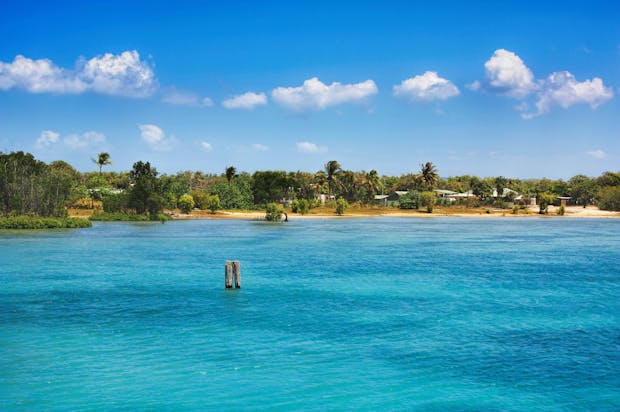
Guest Post: Australia violated the rights of Torres Strait Islanders by failing to act on climate change, the UN says. Here’s what that means

Shutterstock
Guest post by Kristen Lyons, The University of Queensland via the Conversation.

In a landmark decision, a United Nations committee on Friday found Australia’s former Coalition government violated the human rights of Torres Strait Islanders by failing to adequately respond to the climate crisis.

The Torres Strait Islanders ‘Group of Eight’ claimed Australia failed to take measures such as reducing greenhouse gas emissions and upgrading seawalls on the islands. The UN upheld the complaint and said the claimants should be compensated.

This decision is a breakthrough in Indigenous rights and climate justice, including by opening up new pathways for Indigenous communities – who are often on the frontline of the climate crisis – to defend their rights.

Monday, November 1, 2021

An indigenous story motivates COP26 opening in Glasgow

Outgoing COP President Carolina Schmidt from Chile started the proceedings before handing over to UK Minister Alok Sharma, who was formerly elected by acclamation to COP26 president, who summed up the job of the conference in his speech as to “ensure where Paris promised, Glasgow delivers”.

Patricia Espinosa, executive secretary of the UNFCCC  told delegates: “We stand at a pivotal point in history”. She urged countries to come together to make progress in Glasgow, saying every day that delays the implementation of the Paris agreement “is a wasted day”.

"We must look beyond the numbers to the humans they represent. The data is unequivocal – we must limit the global temperature rise to 1.5C by the end of the century. We must use the science and act upon it."

"Consider the trust vested in you by billions – and achieve success, not just for our generation, but for all generations to come." said Espinosa in her speech.

But the most moving speech was the story of India Logan-Riley from Aotearoa on behalf of Indigenous peoples. She outlined the importance of indigenous knowledge and staying strong with the land and culture. Indigenous Leadership has already prevented substantial emissions by stopping or delaying  fossil fuel projects.

Monday, April 11, 2016

Attenborough on the Great Barrier Reef, sea level rise and climate change


Did you watch the first part of David Attenborough's documentary on the Great Barrier Reef?

This is a remarkable documentary with filming ending just as the reef was undergoing massive coral bleaching due to exceptionally warm waters caused by climate change. This is the third global coral reef bleaching event on record.

Attenborough first visited and documented the reef 60 years ago. Part one of the three part series contains an allegorical story from the Cairns area about sea level rise from the aboriginal dreamtime.

The Great Barrier Reef, geologically speaking, is a relatively recent phenomena. Sea levels were 70 to 90 metres lower during the Ice Age period with a narrow and steep shoreline where the east coast of Australia fell sharply to deeper waters. Sea levels started to rise at the end of the last ice age about 14,000 years ago.

Friday, June 29, 2012

Hot change for Arabunna people of Lake Eyre facing climate change


New research from the University of Adelaide has highlighted the challenges facing the Arabunna people in the north of south Australia who face increased temperatures and a drier climate with global warming that will impact their traditional culture and lifestyle. The traditional Arabunna lands include the Lake Eyre region and also cover the giant Roxby Downs BHP uranium mine.

There will be a doubling of days above 40 degrees celsius by the 2070s with increases of 5 degrees and more. Such change will effect the fragile desert ecosystems and greatly impact the availability of bush tucker and the wellbeing of sacred sites.

Friday, January 28, 2011

Forests are not commodities - REDD under fire for narrow focus on carbon storage


A new report from some of the world's top experts on forest governance has criticised various international climate change accords including REDD (Reducing Emissions from Deforestation and forest Degradation) and REDD+ for their narrow focus on carbon storage which has failed to stop rampant destruction of the world's most vulnerable forests and often acted to further marginalise indigenous peoples.